
Is It Worth Travelling to Darjeeling During the Monsoon?
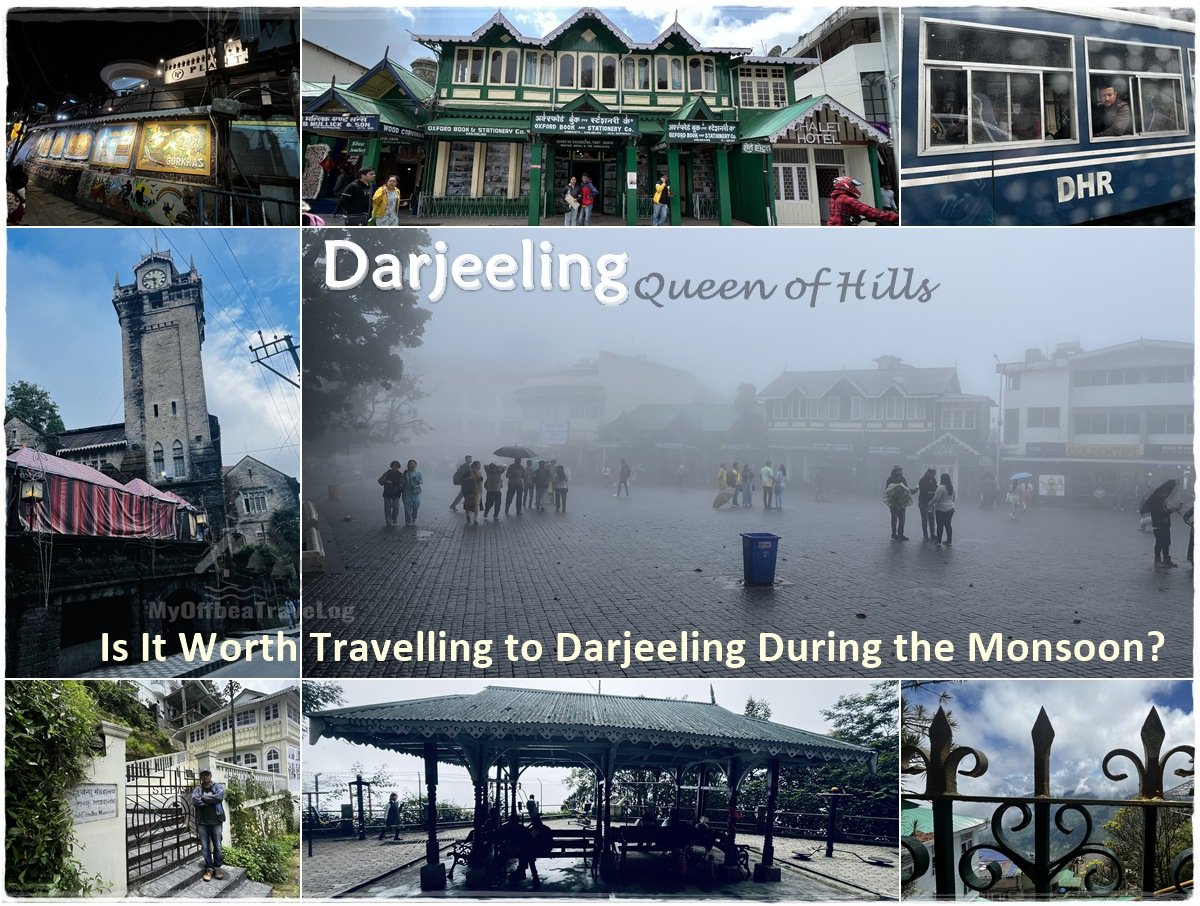
Darjeeling (also lovingly called the Queen of the Hills) takes on a unique character during the monsoon, transforming into a fresh and enchanting Himalayan landscape. The famous mountain town often disappears beneath a blanket of clouds and mist, where tea gardens turn greener, winding roads glisten with rain, and every corner carries a mysterious charm. Amidst this dreamy atmosphere, the sudden rhythm of raindrops and the quiet sound of the hills create an experience that becomes an unforgettable part of the Darjeeling journey.
Although most travelers prefer visiting Darjeeling during the clear skies of summer and autumn, a section of travel enthusiasts are now exploring the charm of the hills during the monsoon and winter seasons.
In recent years, Monsoon Tourism has also gained attention, with efforts to showcase the quieter, greener, and more intimate side of the mountains.
This travel diary takes you beyond Darjeeling’s familiar sights, uncovering its offbeat character, hidden heritage, and lesser-known stories as the monsoon transforms the hills into a world of mist, rain, and unexpected discoveries.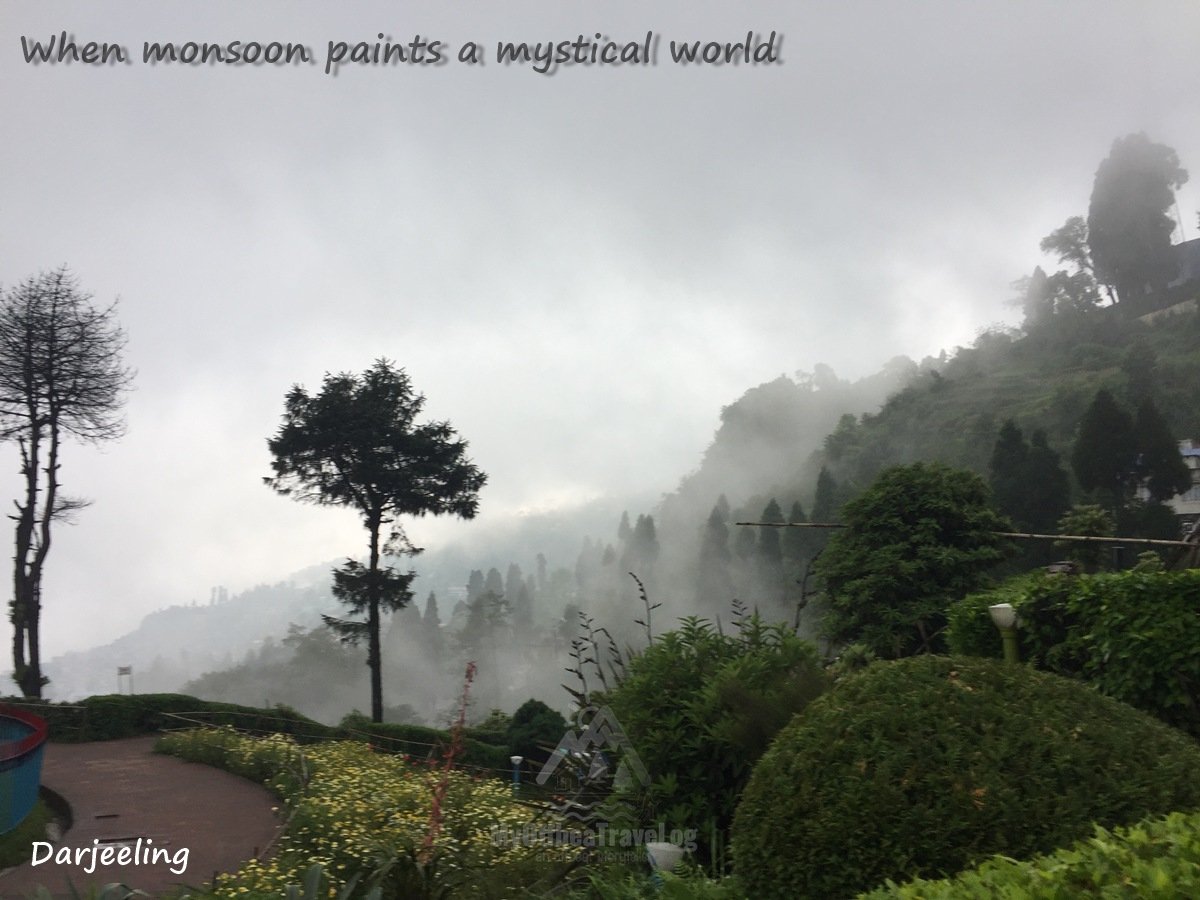
The origin of the name Darjeeling
The origin of the name Darjeeling has been the subject of several interpretations, but the Tibetan derivation is the most widely accepted among historians and scholars. The name is generally believed to have evolved from the Tibetan words Dorje and Ling.
In Tibetan Buddhism, Dorje (Sanskrit: Vajra) refers to the Thunderbolt or Diamond, a sacred symbol representing spiritual power, purity, and indestructibility. The word Ling means a Place/Land/Kingdom. Thus, Dorje Ling is commonly translated as the Land of the Thunderbolt, Place of the Vajra, or Kingdom of the Diamond Thunderbolt.
The name is traditionally linked to the historic Dorje Ling Monastery, which was believed to have stood on Observatory Hill before the area developed into the modern town of Darjeeling. During the British colonial period, the pronunciation gradually changed from Dorje Ling to the anglicized form Darjeeling, which became the name by which the hill station is known today.
Where is Darjeeling Town Located?
Altitude: At around 6,709 ft. above the sea level.
Location: It is the official headquarters of the Darjeeling District in the state of West Bengal, India.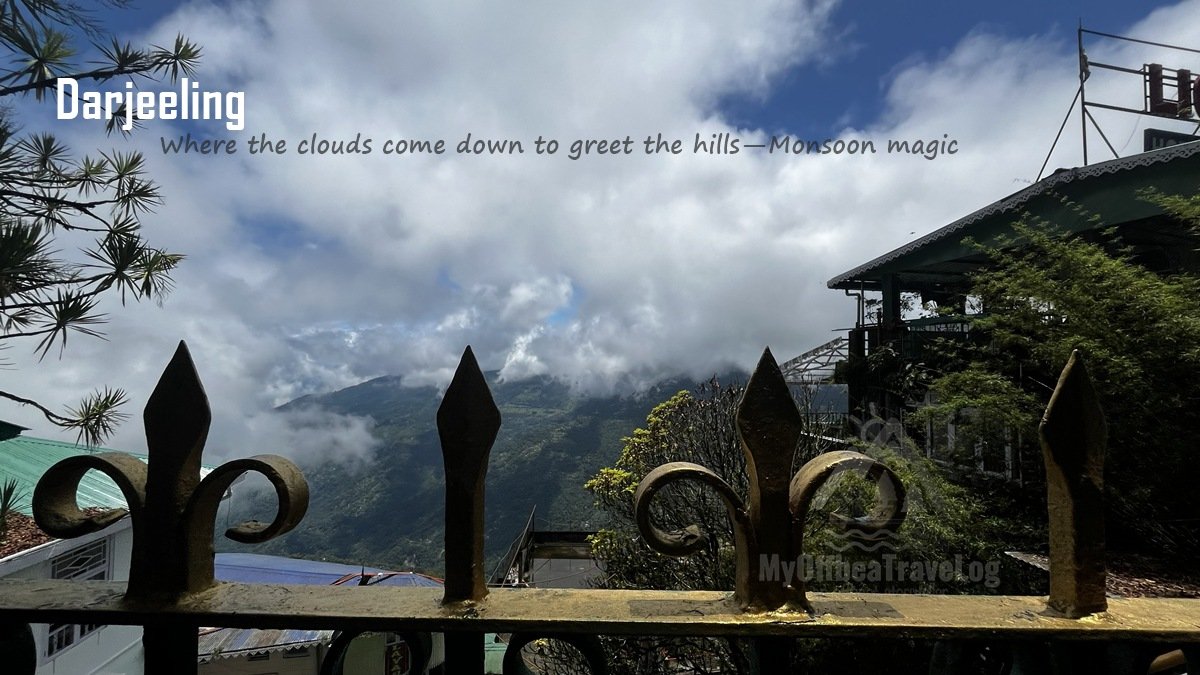
Essential Information of Darjeeling
Nearest Airport
International: Bagdogra Airport (IXB), WB
Nearest Town
- Kurseong Town (Also known as Land of White Orchids)
- Siliguri Town
- Kalimpong Town
- Gangtok (The Capital of Sikkim)
Nearest Main Railway Stations
- New Jalpaiguri (NJP)
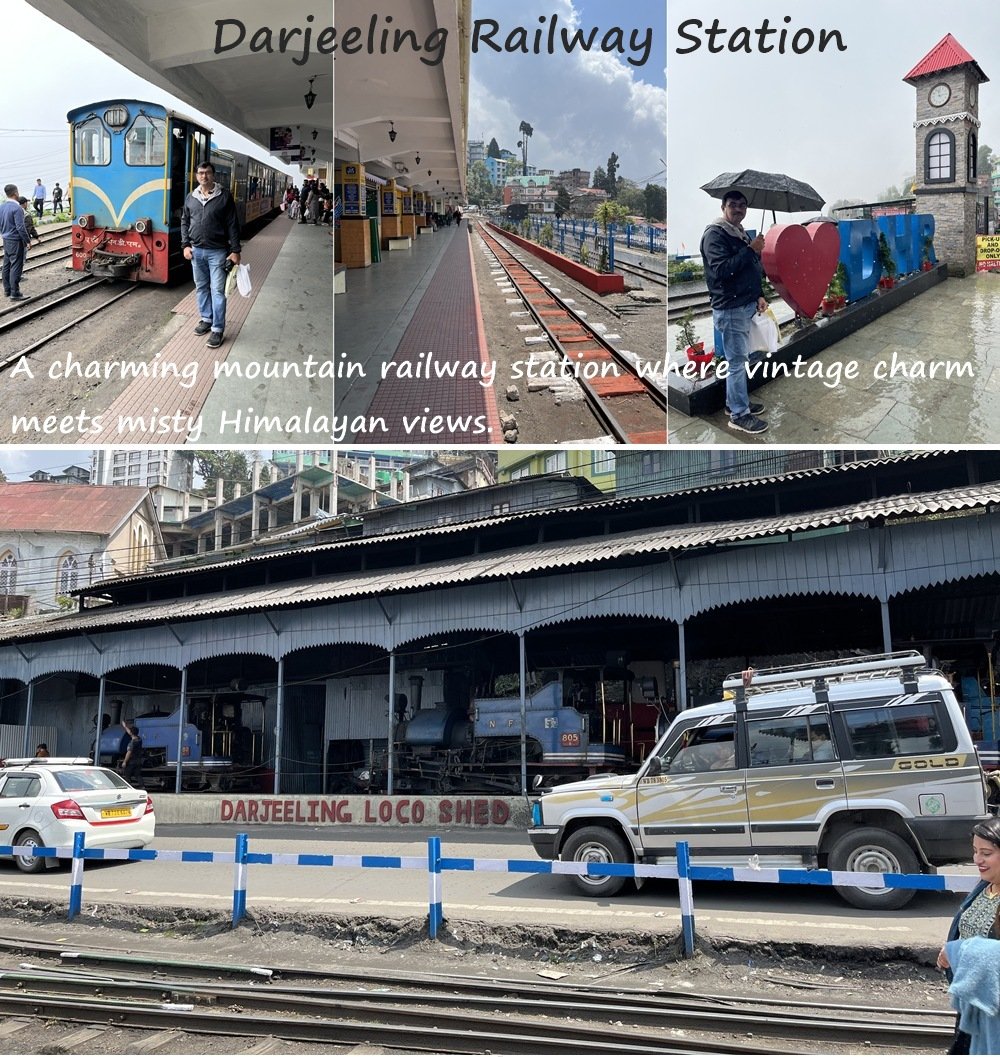
- Darjeeling Railway Station (DJ): This station is situated at an altitude of 6,812 feet(approx.).
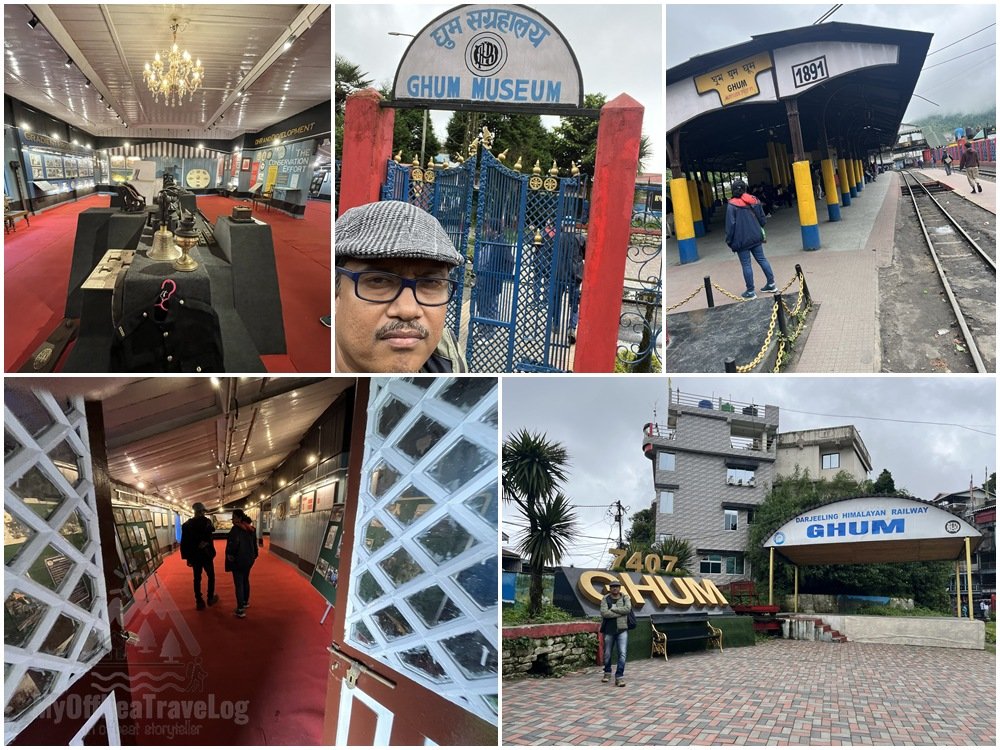
- Ghum/Ghoom Railway Station (Established in 1881): This station is situated at an altitude of 7,407 feet. It is the highest railway station in the country and the 14th highest globally. There is an interesting Railway Museum located here, where railway-related artifacts are well preserved. However, a fee is required to enter. Apart from Ghum, DHR also has two other museums, one in Kurseong and another in Sukna. This iconic narrow-gauge stop is a prominent part of the UNESCO World Heritage-listed Darjeeling Himalayan Railway (Toy Train). Click on the below link for more details.
https://dhr.indianrailways.gov.in/
Distance from Darjeeling (Approx. Measurement)
| Destination | Distance (KMs) |
| Gangtok Town | 121 |
| NJP Railway Station | 73 |
| Bagdogra Airport (IXB) | 69 |
| Tenzing Norgay Bus Stand, Siliguri | 65 |
| Kurseong Town | 30 |
| Kalimpong Town | 69 |
| Sittong | 42 |
| Dawaipani | 20 |
| Takdah | 26 |
| Lamahatta | 21 |
| Chatakpur | 21 |
How to Reach Darjeeling During the Monsoon
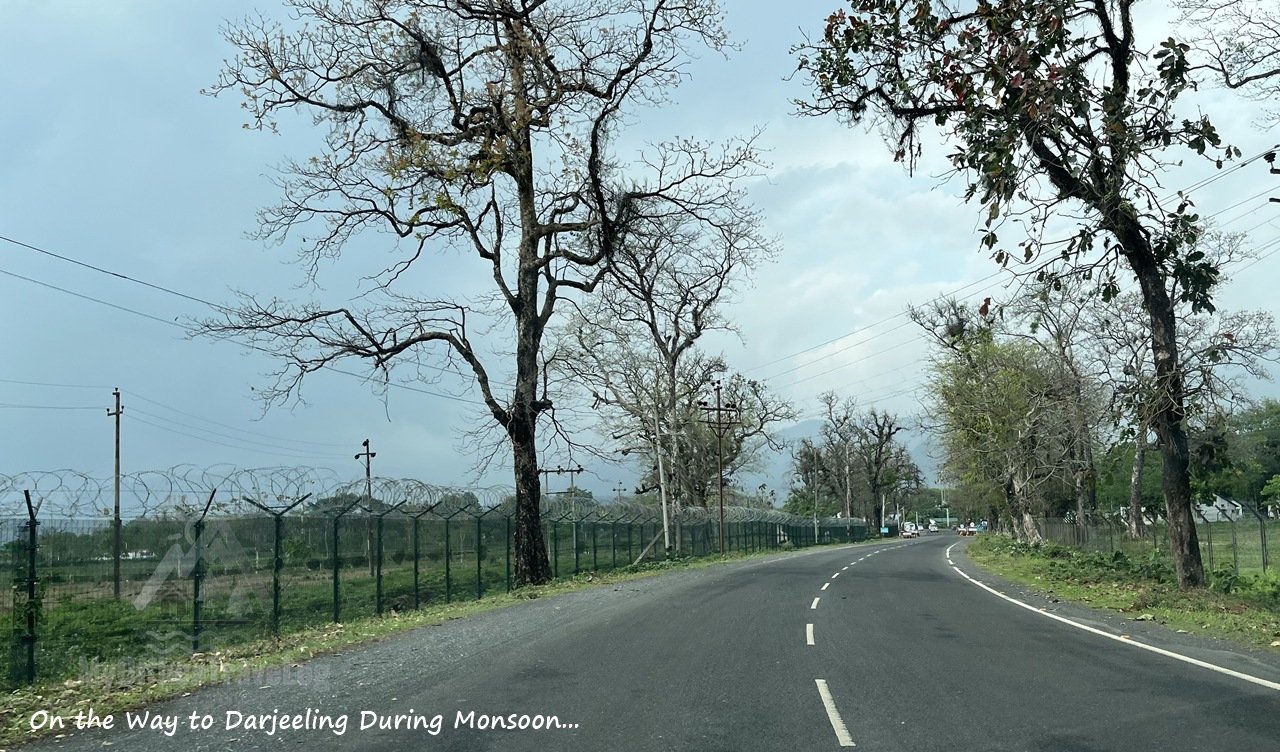
Darjeeling is well connected by road with Bagdogra Airport, New Jalpaiguri (NJP) Railway Station, and Siliguri. Several hill roads connect Darjeeling with Kurseong, Mirik, Kalimpong, Gangtok and other destinations in the region. During the monsoon, however, road conditions can change quickly because of heavy rain, landslides and temporary traffic restrictions.
Travelers can reach Darjeeling from Siliguri, NJP and Bagdogra by Government bus, shared taxi, private cab/Taxi or the iconic Darjeeling Himalayan Railway (DHR) Toy Train.
Regular buses from Tenzing Norgay Bus Stand, Siliguri connect to Darjeeling and nearby hill destinations, offering a budget-friendly option.
Major Road Routes to Darjeeling
Hill Cart Road / NH 110 Route
Siliguri → Sukna → Rongtong → Kurseong → Sonada → Ghum → Darjeeling
Rohini Road
Siliguri → Rohini → Rohini Tea Garden → Kurseong → Sonada → Ghum → Darjeeling
Pankhabari Road
Siliguri → Pankhabari → Kurseong → Sonada → Ghum → Darjeeling**
Mirik Route
Siliguri → Mirik → Soureni/Sukhiapokhri → Jorebungalow/Ghum → Darjeeling**
The Mirik route is particularly scenic, passing through tea gardens, forests and mountain landscapes.
Other Road Connections
Darjeeling also has road connections towards Kalimpong, Gangtok, Manebhanjan, Sandakphu and other offbeat destinations. These routes can be useful for travellers planning multi-destination trips across the Darjeeling and Sikkim hills.
Advisory: During June–September, do not assume that every route will remain open throughout the day. Heavy rainfall can trigger landslides, falling debris, waterlogging and road damage, resulting in delays or temporary closures.
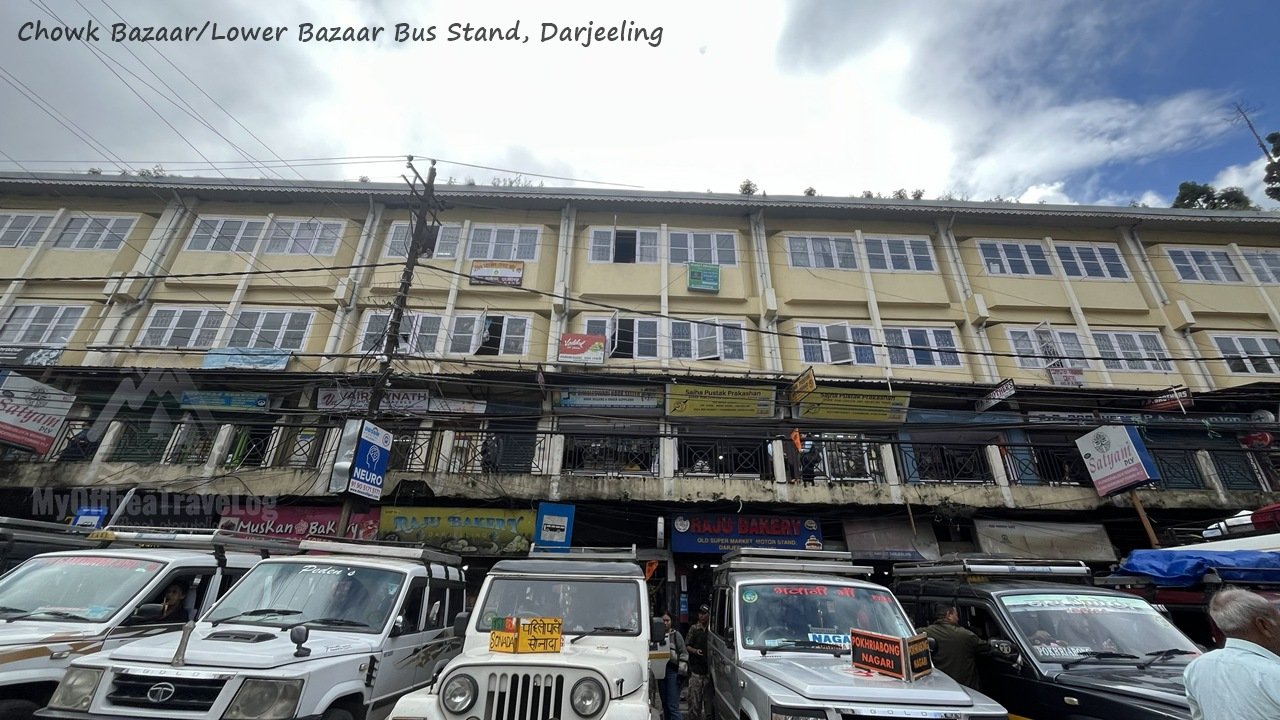
The primary shared taxi and transport hub in Darjeeling is located at Chowk Bazaar (Lower Bazaar), while transit from the plains originates out of key connection points in Siliguri
Return Journey from Darjeeling to the Plains & Nearby Hill Destinations
The primary shared taxi and transport hub in Darjeeling is located at Chowk Bazaar (Lower Bazaar).
Darjeeling Bus Stand (Chowk Bazaar) — for buses to Siliguri and other destinations.
Shared taxis are available from Chowk Bazaar, Clubside/Gandhi Road, and the Motor Stand.
Discover Tibetan Heritage Beyond Shopping
Located about 4 kilometers from Chowrasta (The Mall), the Tibetan Refugee Self-Help Centre (Workshop & Handicrafts complex) is an ideal place to spend a peaceful monsoon afternoon. More than a shopping destination, it offers a glimpse into the Tibetan community’s resilience and heritage through interactions with its elderly members and its exquisite handwoven carpets, woolens, woodwork, and traditional handicrafts.
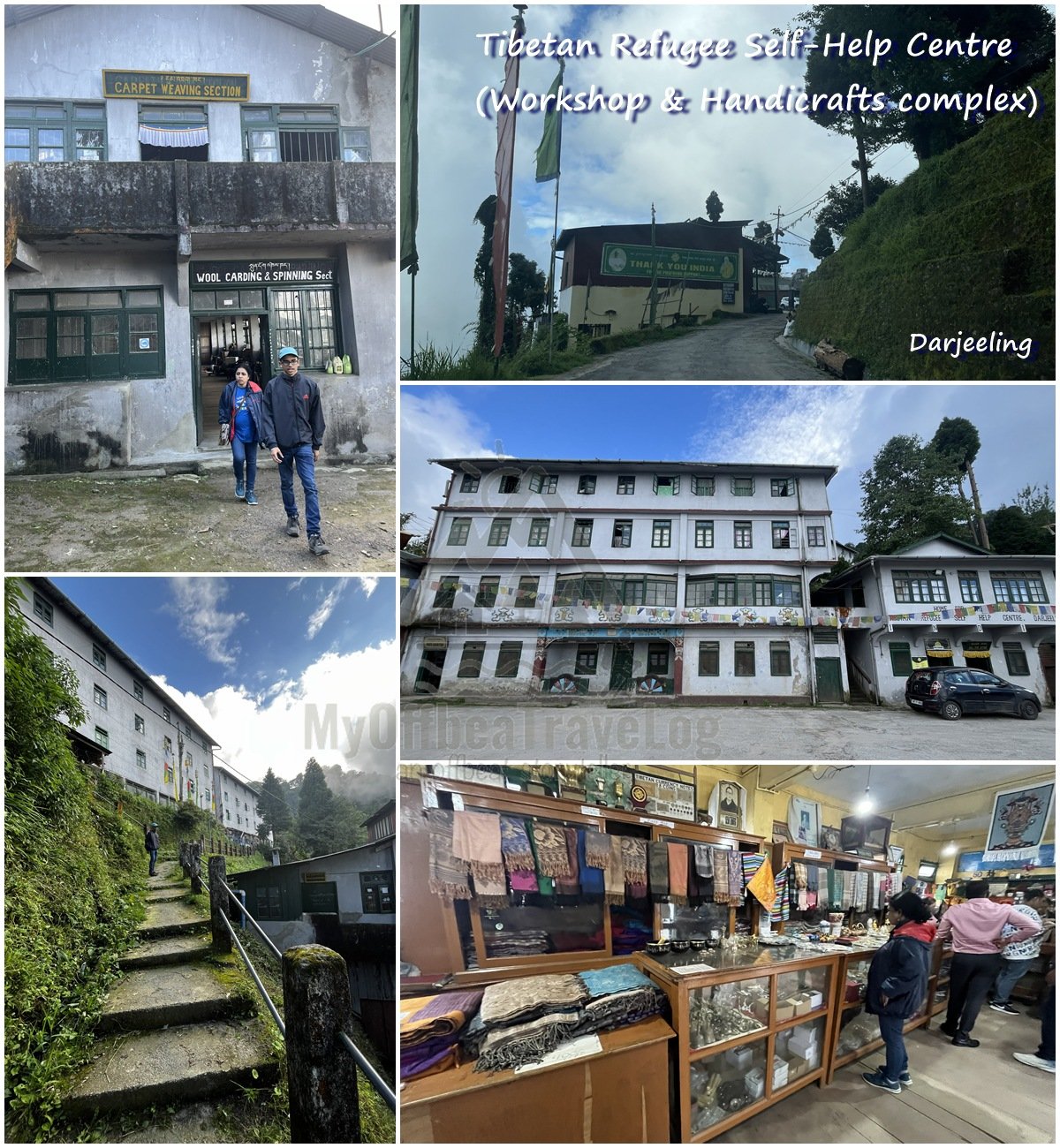
Established: On 2nd October 1959, following the arrival of Tibetan refugees in India.
Location: The hillside of Lebong in the Darjeeling District of West Bengal.
Purpose: To provide rehabilitation, education, healthcare, and livelihoods for Tibetan refugee families while preserving Tibetan culture and tradition.
Crafts: Hand-knotted Tibetan carpets, Thangka paintings, Wood carving, Metalwork, Woollen garments, and textiles.
Opening Hours: Monday–Saturday, 8:00 AM–4:30 PM (closed on Sundays).
Entry fee: Free.
Souvenir: There’s also a showroom where you can buy authentic handmade products, with proceeds supporting the community.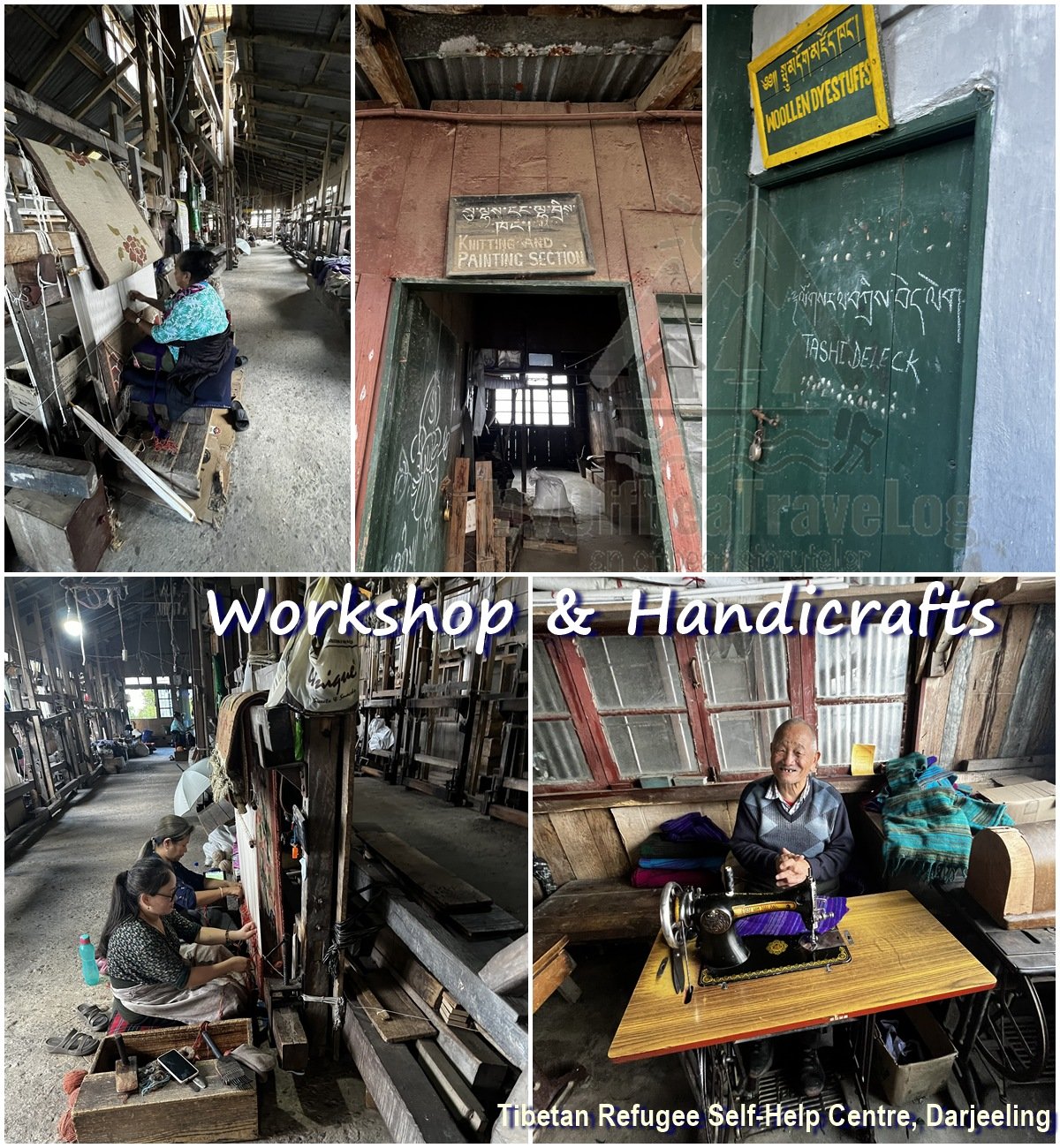 Support a Heritage, Take Home a Story
Gorkhey Haat / Gorkhey Haat Gundri Bazar), Darjeeling
Bringing back the forgotten traditions of the Hills
You certainly shouldn’t miss Darjeeling’s Gorkhe Haat (also known as Gorkhey Haat Gundri Bazar), which is held every Thursday from 9 AM to 6 PM. At this vibrant market, local vendors dressed in traditional attire display an array of delicious regional delicacies, fresh farm produce, and various handmade goods. It is not merely an ordinary market but a lively celebration of Gorkha culture and heritage. If you are planning a trip during the monsoon season, be sure to schedule your visit to include a Thursday so you can experience this unique cultural event—though do remember to carry an umbrella and a raincoat.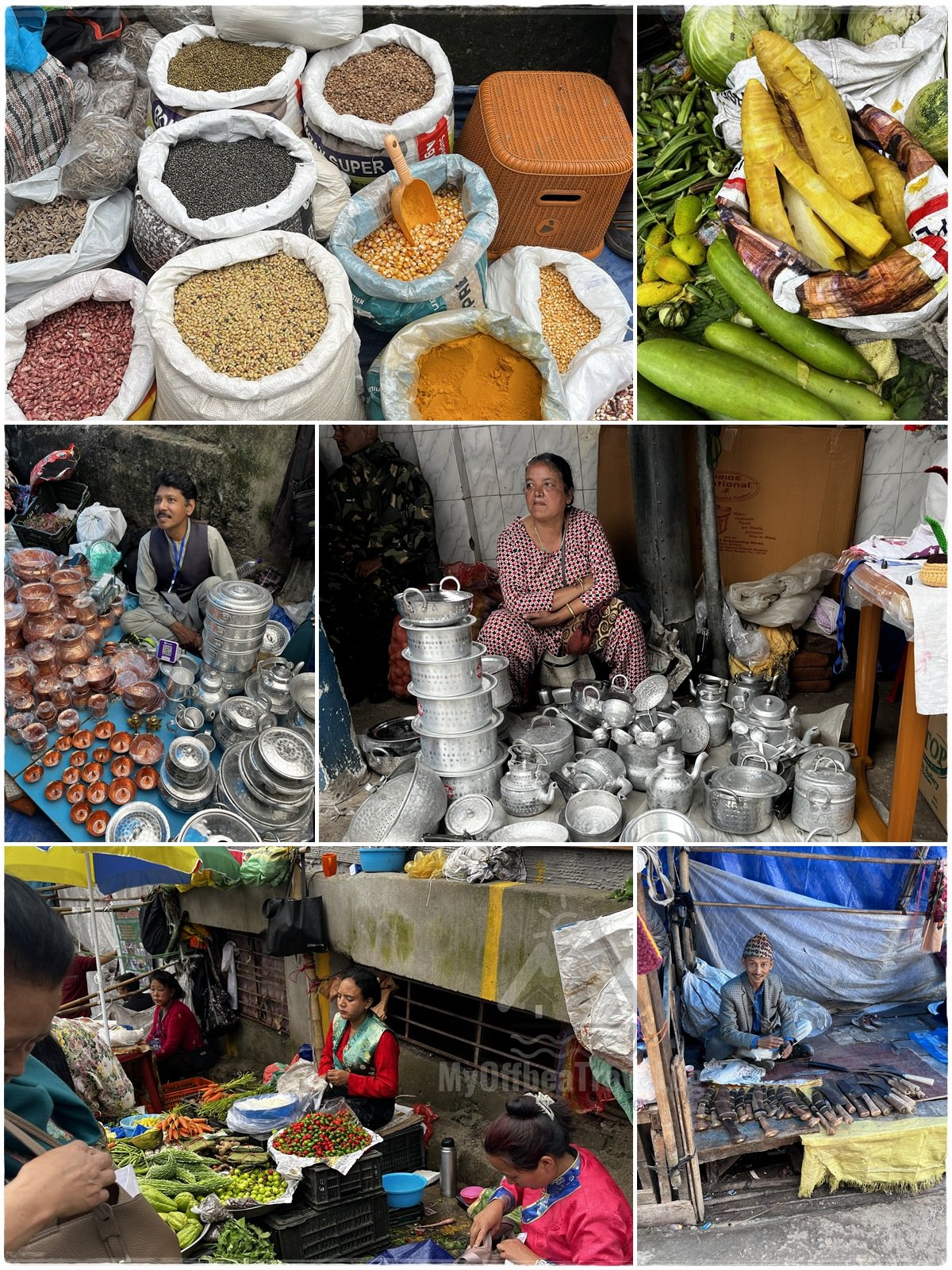
The Story Behind the Initiative
Launched on June 29, 2024, by Gorkha Haat Samuha, this haat began at Himalaya Kala Mandir to revive the rich traditions of the Darjeeling Hills.
Nowadays, it is held every Thursday (9am to 6pm) around H.D. Lama Road, near Chowk Bazaar Motor Stand, offering visitors a glimpse into Darjeeling’s Gorkha culture, local stories, and living traditions.
How to reach the Haat
It can be reached by taking a short walk down the sloping lane from Chowrasta (Mall Road), which is only a few minutes away on foot.
Culinary Delights to Experience
Discover the authentic flavors of Darjeeling through traditional Gorkha cuisine, featuring:
- Wachipa, Sekuwa (grilled meat specialties), Sel roti, Dhido, Laphing, Aloo Mimi and so on.
- Traditional momos with unique local variations — including the must-try Raagi Momo.
- Fresh organic vegetables and regional farm produce.
Local Treasures to Explore
Take home a piece of Darjeeling’s heritage with:
- Handcrafted artisanal products.
- Traditional pickles, including the famous Dalle Khursani, and locally sourced spices.
- Traditional clothing and warm woolens.
- Fresh produce and specialty products from nearby villages.
Note: Apart from Darjeeling, Gorkhey Haat is also held once a week in Kalimpong, Kurseong, and Siliguri.
Darjeeling Mall (Chowrasta)
The Heart and Soul of Darjeeling
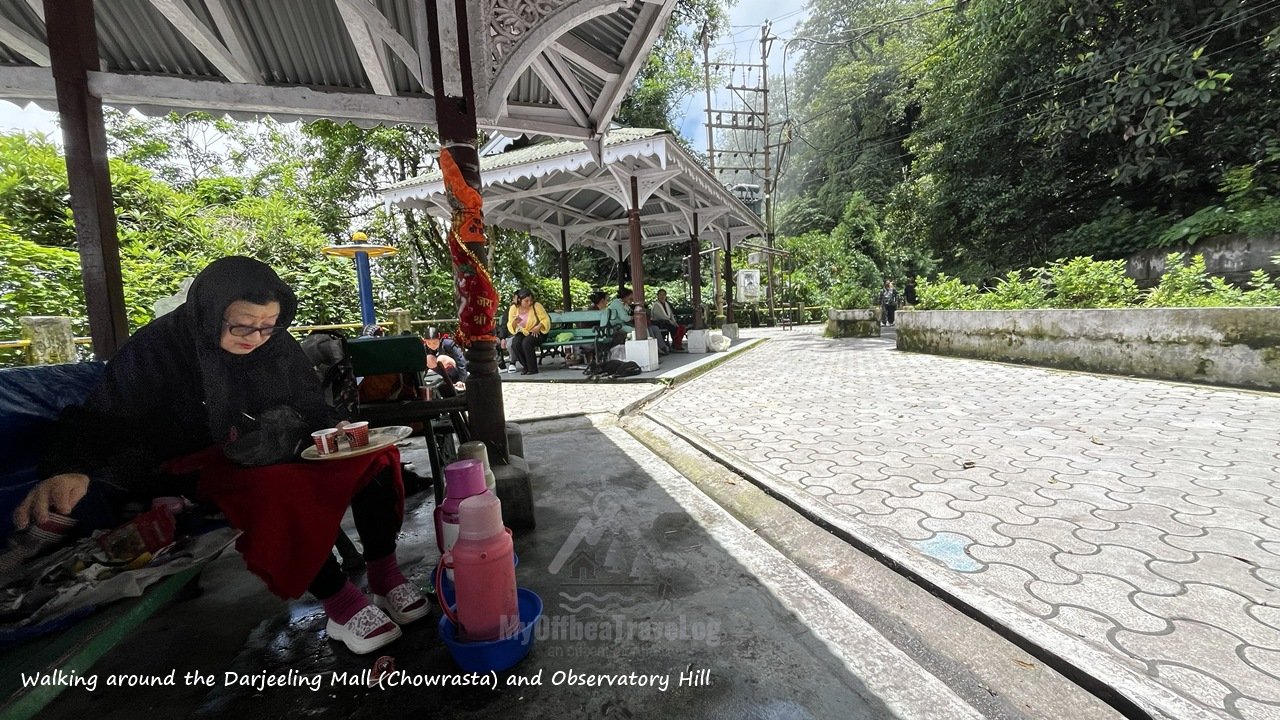
Sitting on a bench at the Darjeeling Mall with a steaming cup of tea, surrounded by drifting mist, gentle monsoon rain, and the timeless charm of Darjeeling—sometimes, that is all one really needs.
Some places do not merely captivate the mind; they find a home in your heart and stay there forever.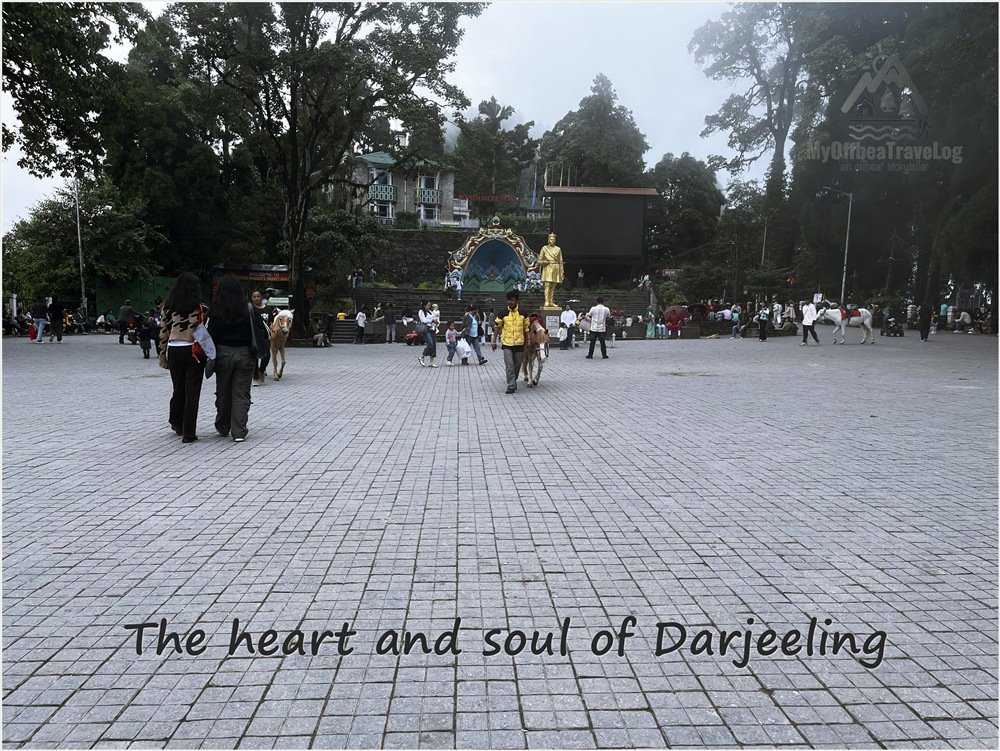
The famous Oxford Book and Stationery Co., located at Darjeeling’s Chowrasta, is a paradise for book lovers. Alongside general literature and fiction, it is well-known for its vast collection of books on Darjeeling, the Himalayas, Sikkim, Tibet, Bhutan, and Nepal. Spending time amidst this diverse range of books is a wonderful way to take shelter from the monsoon rain. 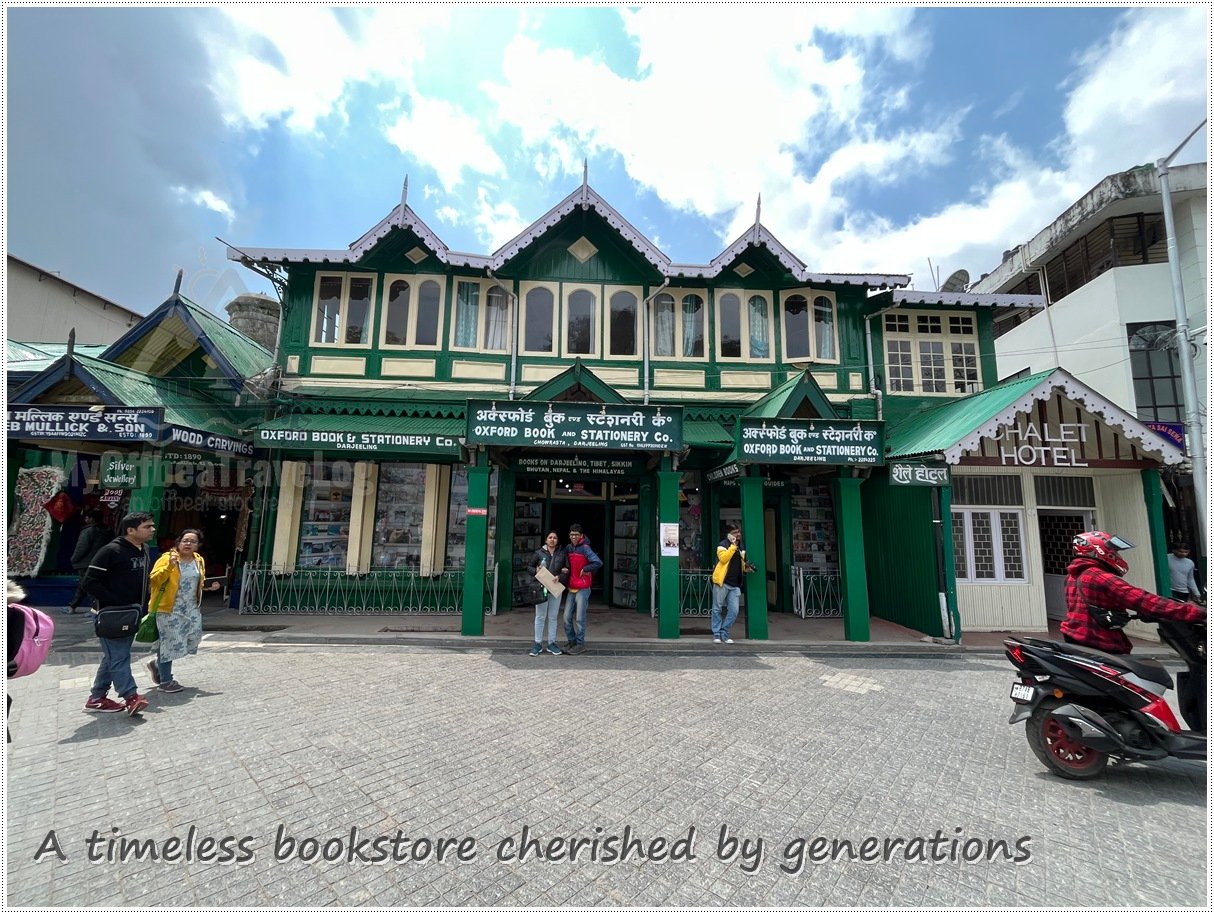
Habeeb Mullick & Son, a historic curio shop in Darjeeling, has been attracting visitors since 1890. Established during the British period, the store is known for its collection of jewellery, carpets, handicrafts, curios, and other traditional items, offering a glimpse into Darjeeling’s old-world commercial heritage.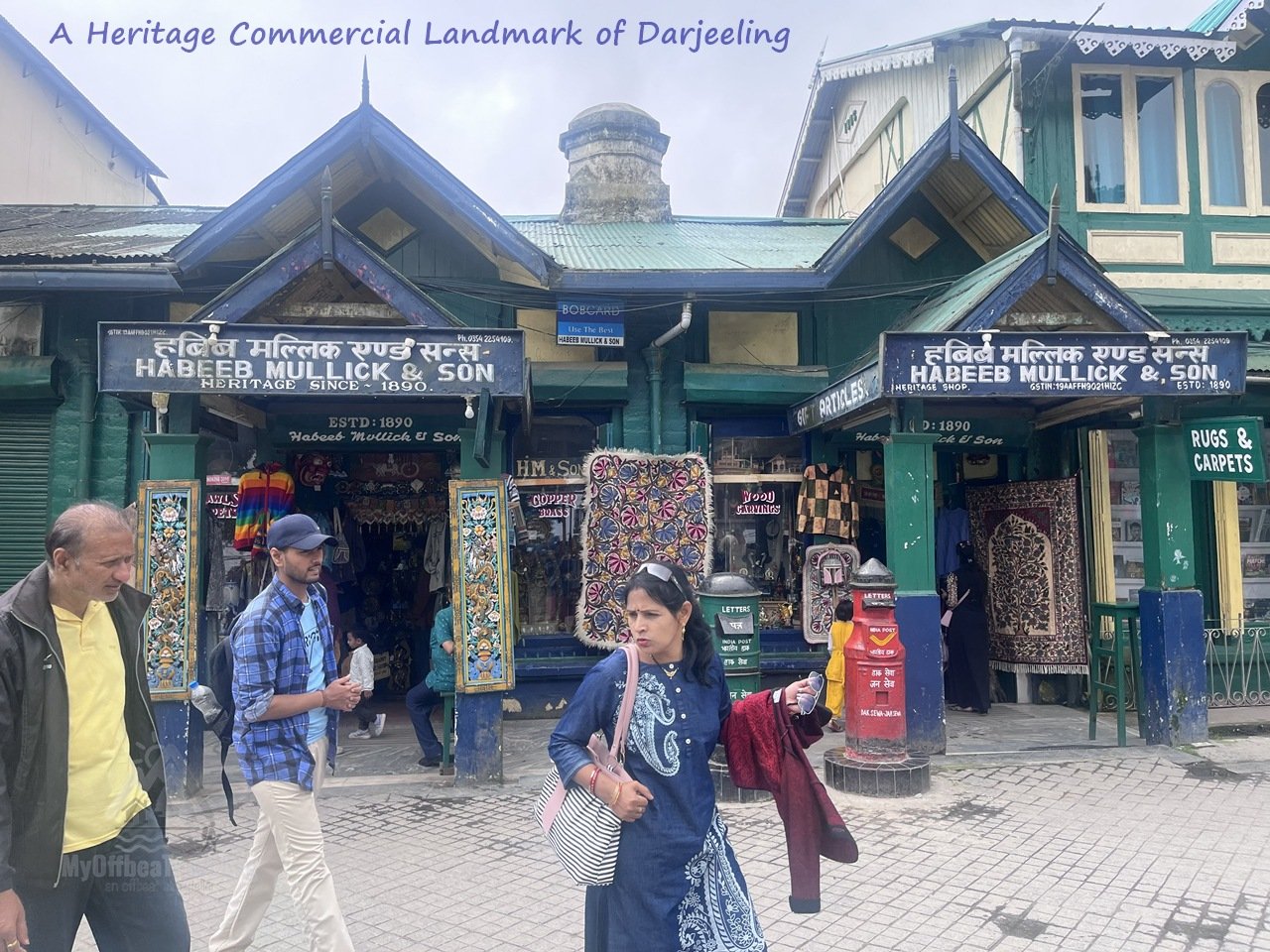
Monsoon Vibes & Spiritual Peace
Dali Monastery (Druk Sang-Ngag Choling Monastery), Darjeeling
Dali Monastery, also known as Druk Thupten Sangag Choeling Monastery, is a renowned Buddhist monastery in Darjeeling. It is situated along Hill Cart Road, beside the Darjeeling Himalayan Railway (Toy Train) line, about 3.5 km from Darjeeling town and just before Ghoom Station.
The monastery was founded by Thuksey Rinpoche in 1971 and serves as the headquarters of the Drukpa Buddhist lineage. The modern monastery building was inaugurated by the 14th Dalai Lama in 1993. During his visit, he stayed at the monastery for three days and gave teachings on Tibetan Buddhism and culture.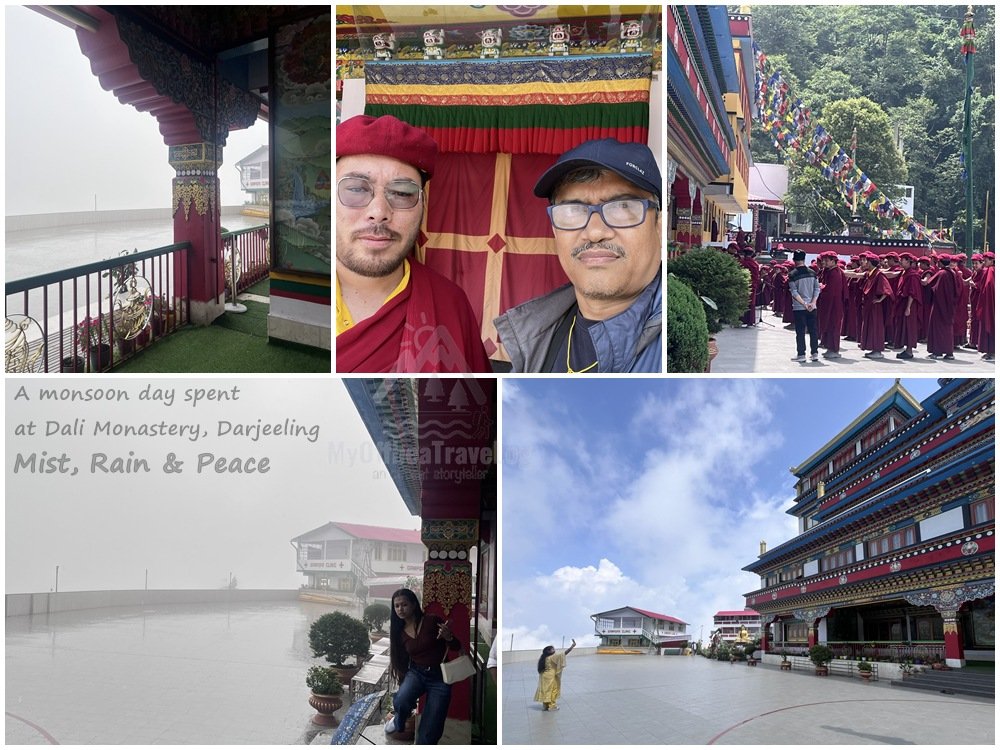
Visitors can explore the beautiful prayer hall, colorful prayer flags, a museum, a library, and a huge golden prayer wheel. Resident monks live and conduct prayers at the monastery, offering visitors a glimpse into Tibetan Buddhist traditions. The museum has an entry fee, and there is also a vegetarian cafe within the monastery premises.
Spending time here during the monsoon feels like stepping away from the bustling streets of Darjeeling and entering a land of silence, meditation, and tranquility. Sitting quietly inside the monastery or in its courtyard—watching the mist drift across the hills and listening to the sounds of prayer—creates a truly peaceful and memorable experience.
A visit to Dali Monastery during the monsoon is more than just sightseeing, it is an opportunity to experience Darjeeling’s quiet side, where misty mountains, falling rain, Buddhist prayers, and the stillness of the monastery come together in a uniquely serene experience.
Prayer Timings
Morning: 5:00 AM – 6:00 AM
Evening: 5:00 PM – 6:30 PM
Shri Mahakal Temple, Darjeeling
It is a famous Shiva temple situated on Observatory Hill, just above the Mall (Chowrasta). It reflects Darjeeling’s rich religious heritage, blending Hindu traditions with Buddhist influences.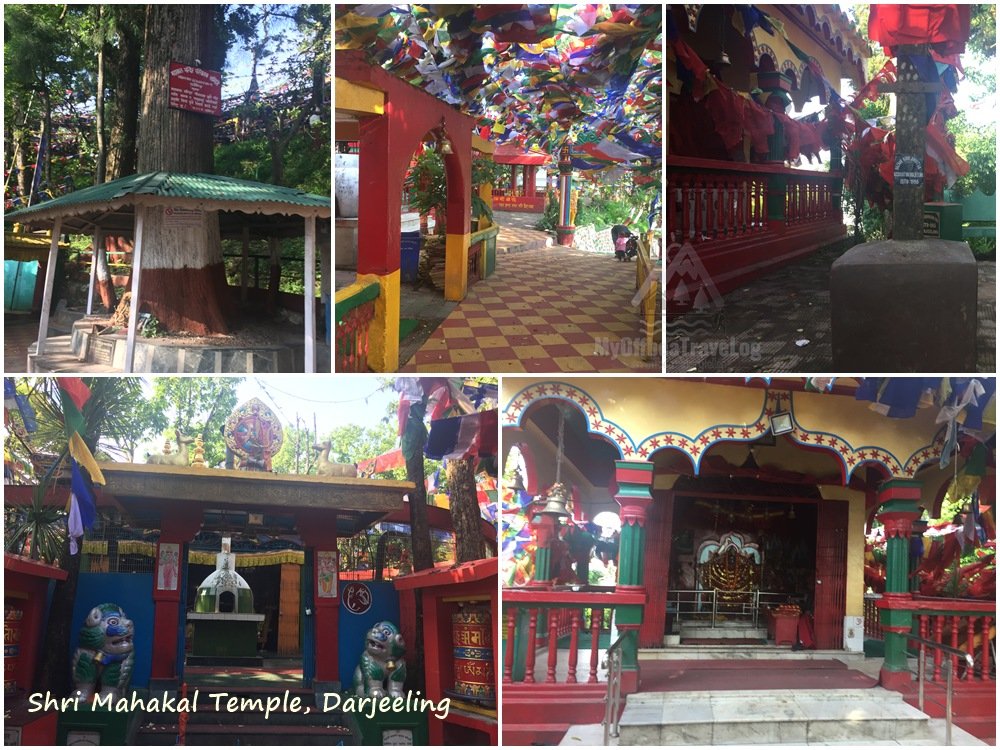
Ramakrishna Mission Nivedita Educational and Cultural Centre (also known as Roy Villa)
This center is located on Lebong Cart Road near Tenzing Rock, Darjeeling. It is historically significant as the place where Sister Nivedita, a disciple of Swami Vivekananda, spent her final days and passed away on 13 October 1911. Today, the centre promotes education, culture, and social service.
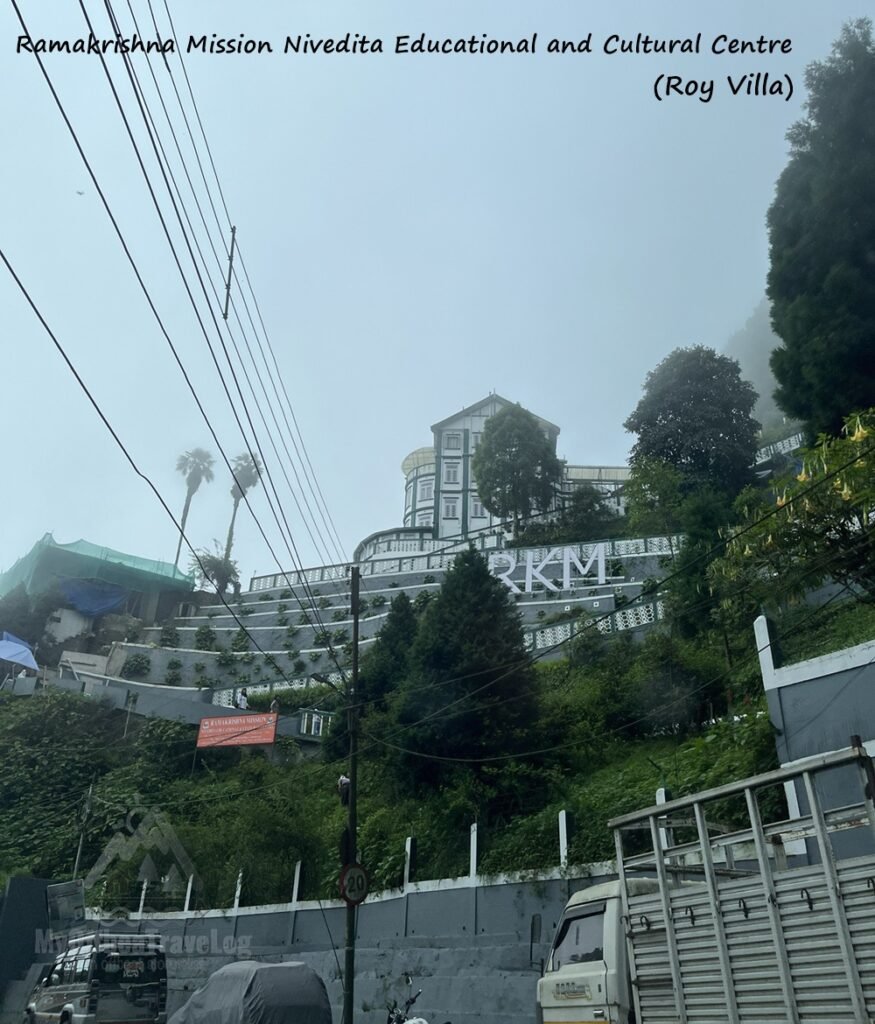
Visiting hours:
Morning: 9 AM – 12 PM
Afternoon: 2 PM – 4 PM
 More stunning photos & videos await you on Instagram, Facebook and X(Twitter). For photos only, don’t miss the Gallery Section. Hope you enjoy!
A Slow Walk Through Darjeeling’s Timeless Charm
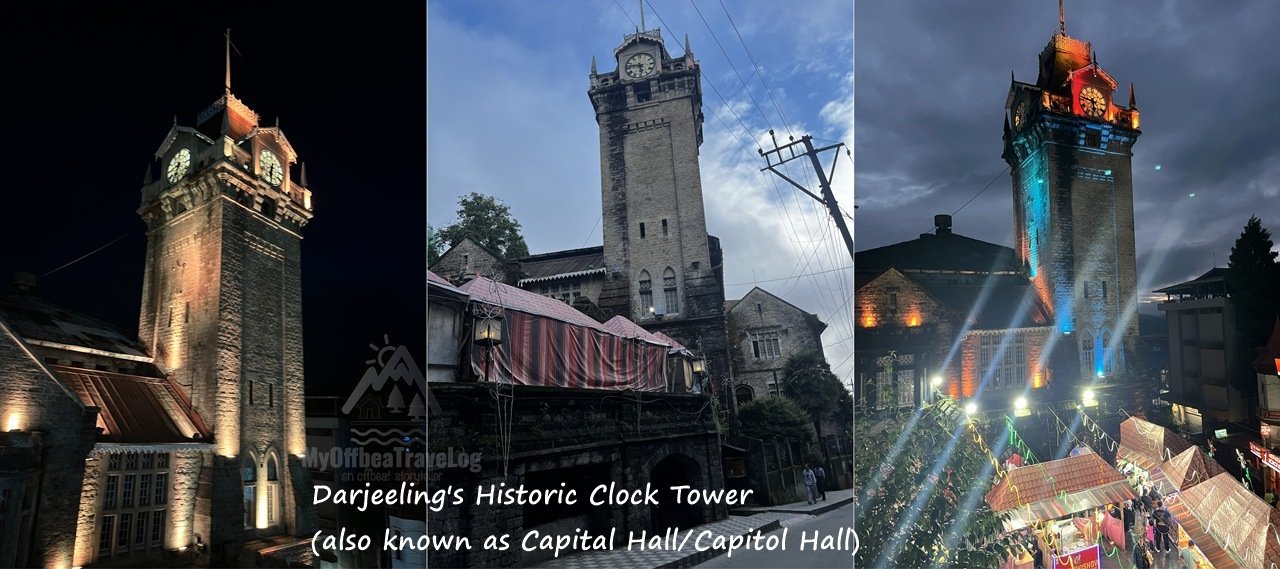
Clock Tower (Capital Hall/Capitol Hall) – One of the most iconic landmarks of Darjeeling
There is little new to say about the history of the Darjeeling Clock Tower (Capital Hall/Capitol Hall), as it is already well known. The building is an important example of Darjeeling’s colonial-era architecture and is recognized as a heritage structure by the West Bengal Heritage Commission. Just as Mount Kanchenjunga is an essential part of the Darjeeling experience, this historic building is also closely connected with the identity of the town.
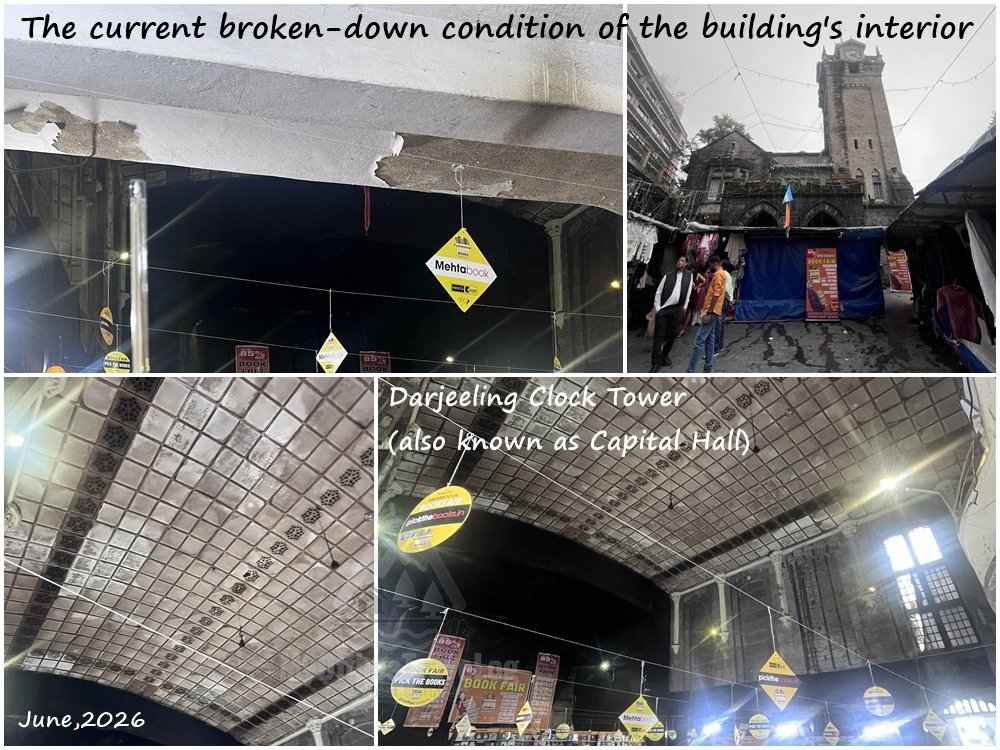
 The current dilapidated state of the interior of Darjeeling’s historic Clock Tower (Capital Hall/Capitol Hall) is deeply concerning. Given the building’s historical and cultural significance, I earnestly request the concerned department to take note of the matter and immediately undertake the necessary repairs and conservation measures to prevent further deterioration of this important heritage structure.
Deshbandhu Sangrahalaya (Deshbandhu Museum)
The historic two-storey villa known as Step Aside, located on C. R. Das Road in Darjeeling, preserving the memory and legacy of Deshbandhu Chittaranjan Das and an important chapter of India’s freedom struggle. The nationalist leader and freedom fighter spent the final days of his life here and breathed his last at this very location on June 16, 1925.
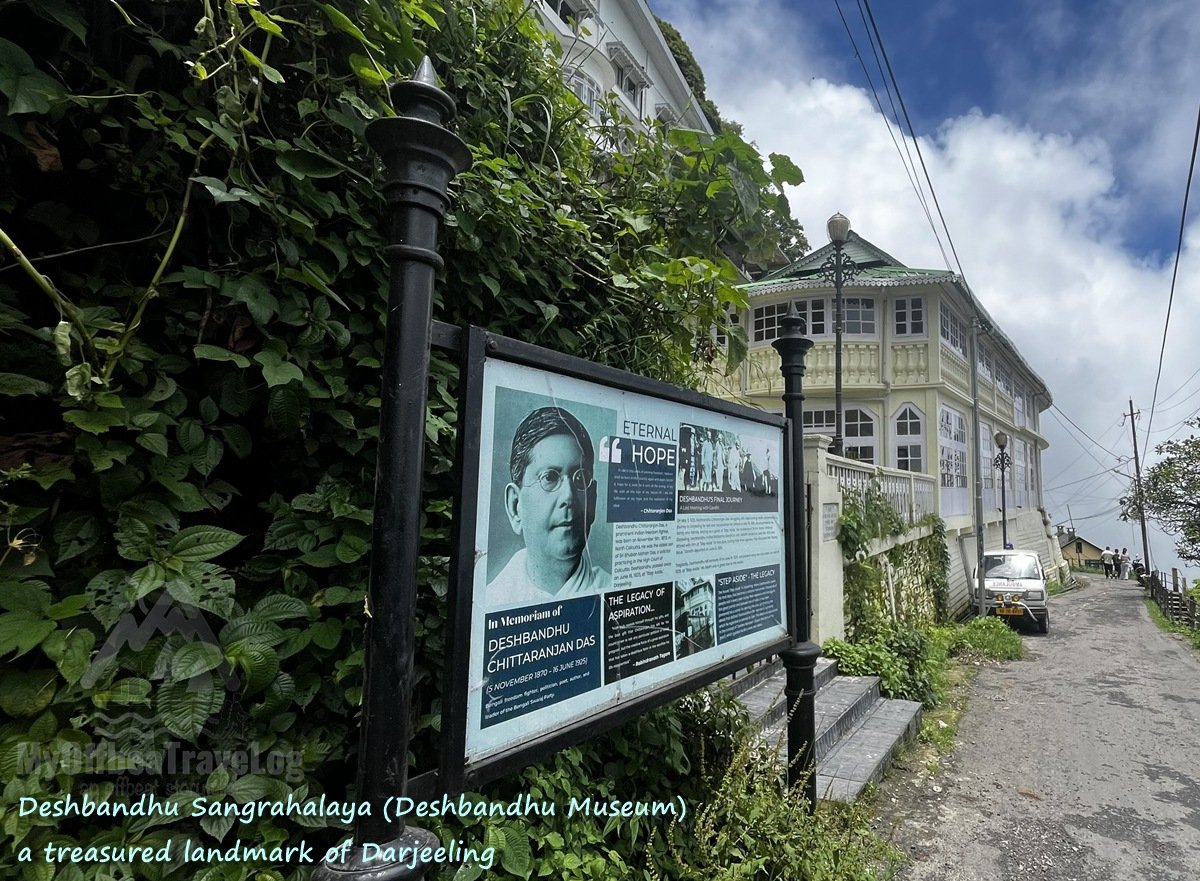 While the site holds immense significance in Darjeeling’s political heritage, the historic building deserves greater care, maintenance, and preservation.
The museum can be reached by a short, approximately five-minute downhill walk from Darjeeling Mall (Chowrasta).
Bhanubhakta Bhavan (also locally knows as Gorkha Rangamancha Bhawan)
A cultural landmark dedicated to Bhanubhakta Acharya, the esteemed Nepali poet known as the Adikavi (First Poet). The building and its association with Nepali literature reflect Darjeeling’s rich Nepali cultural and literary heritage.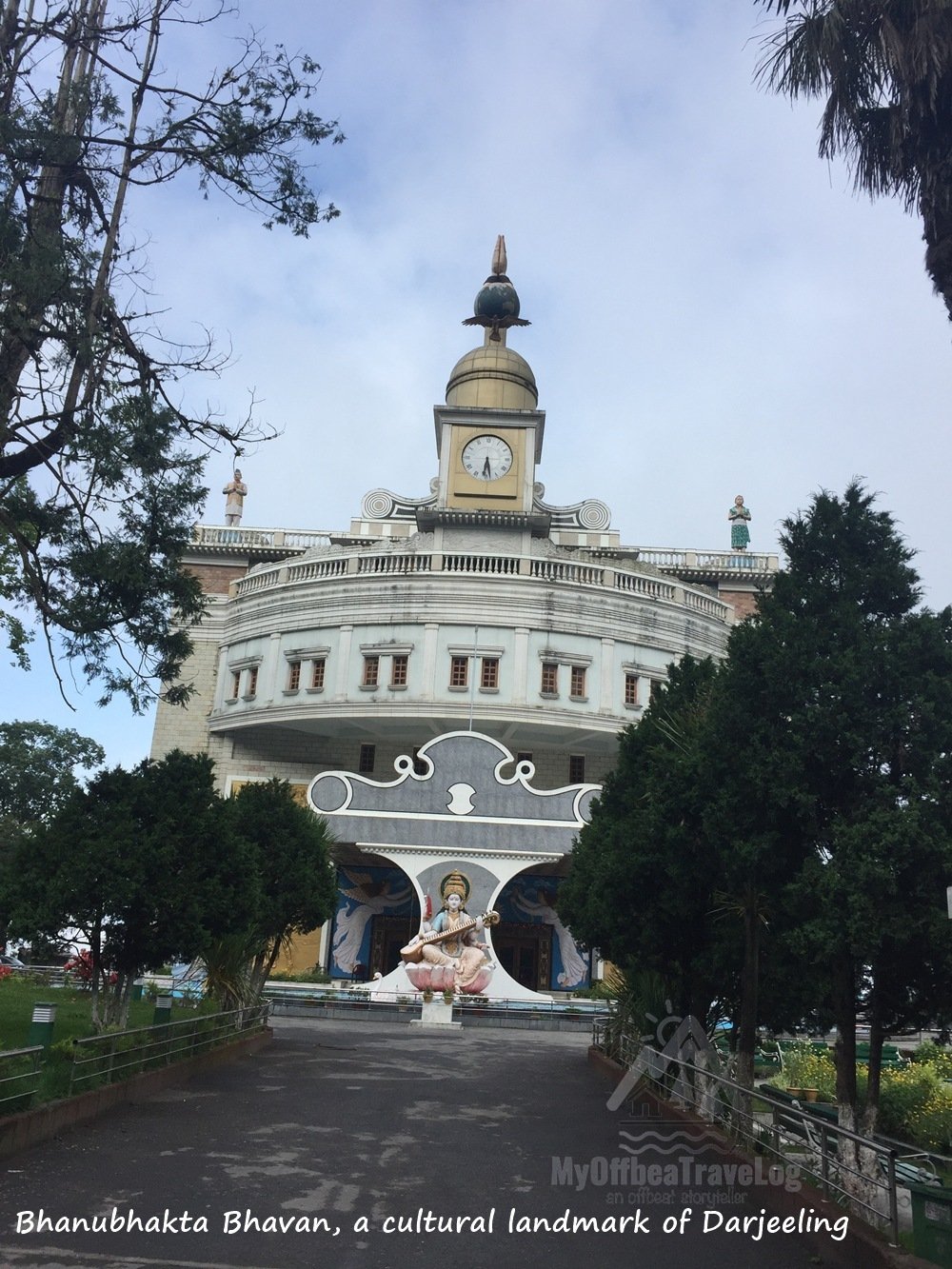
St. Andrew’s Church, Darjeeling
A historic church established in 1843, known for its colonial architecture and iconic clock tower. A peaceful spot perfect for heritage lovers, photography, and quiet moments.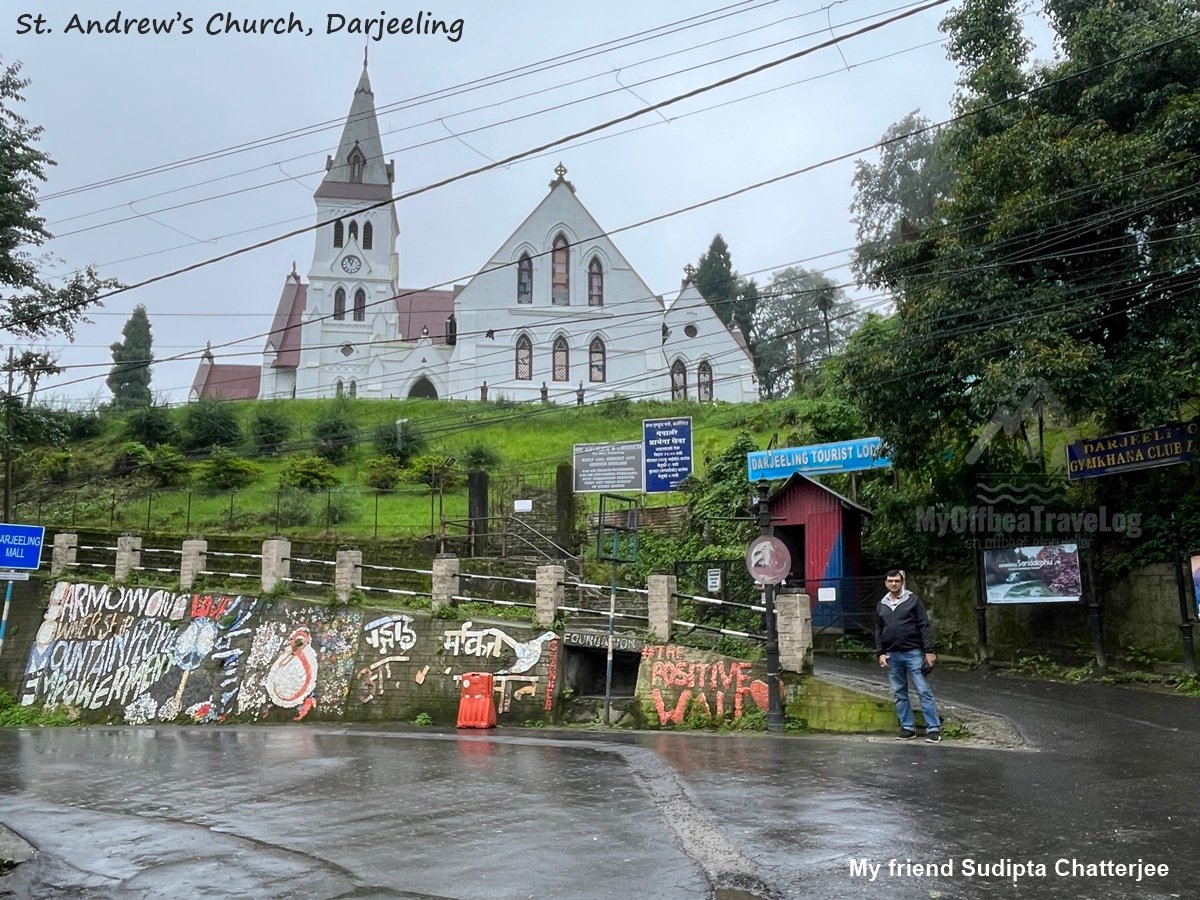
Das Studio
One of my favorite landmarks in Darjeeling is Das Studio, established in 1927 by Thakur Das Pradhan.
The studio is renowned for its collection of vintage photographs of Darjeeling and the Himalayas, along with prints, postcards, and souvenirs.
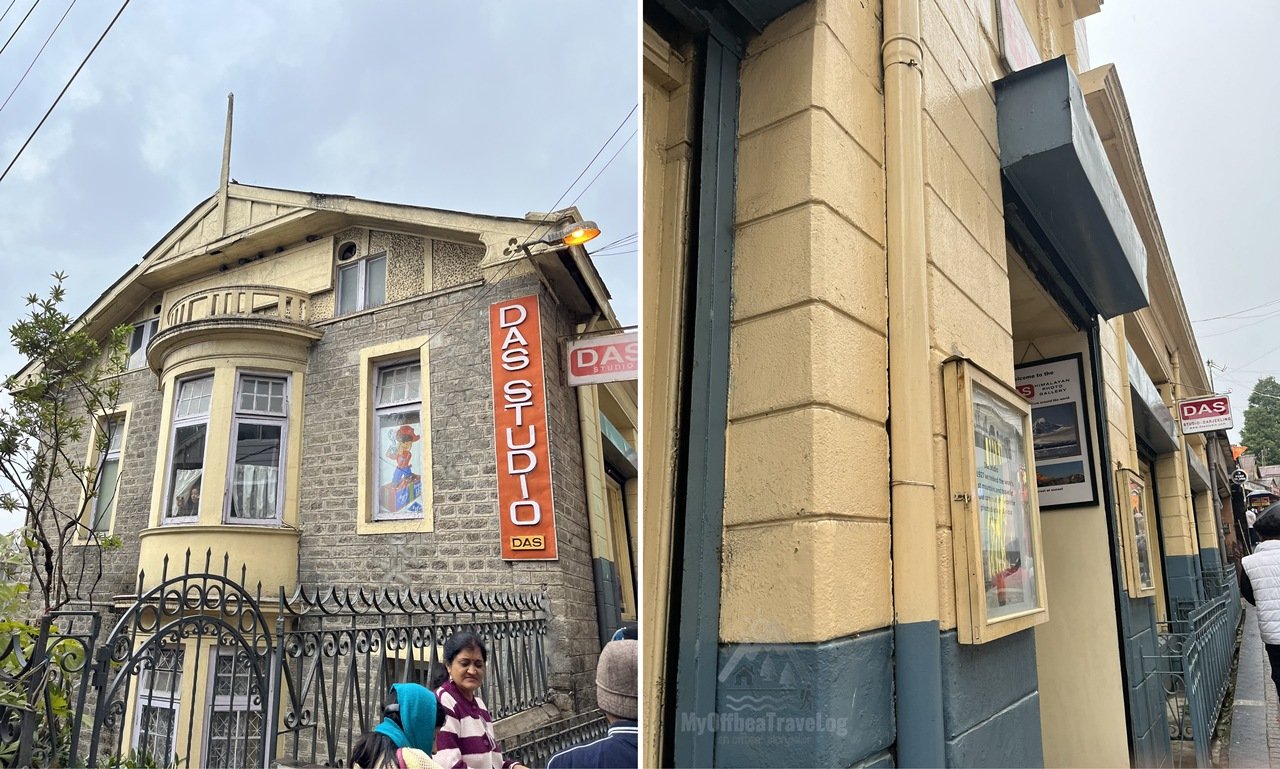 For more information, please visit the official website.
https://dasstudios.com/
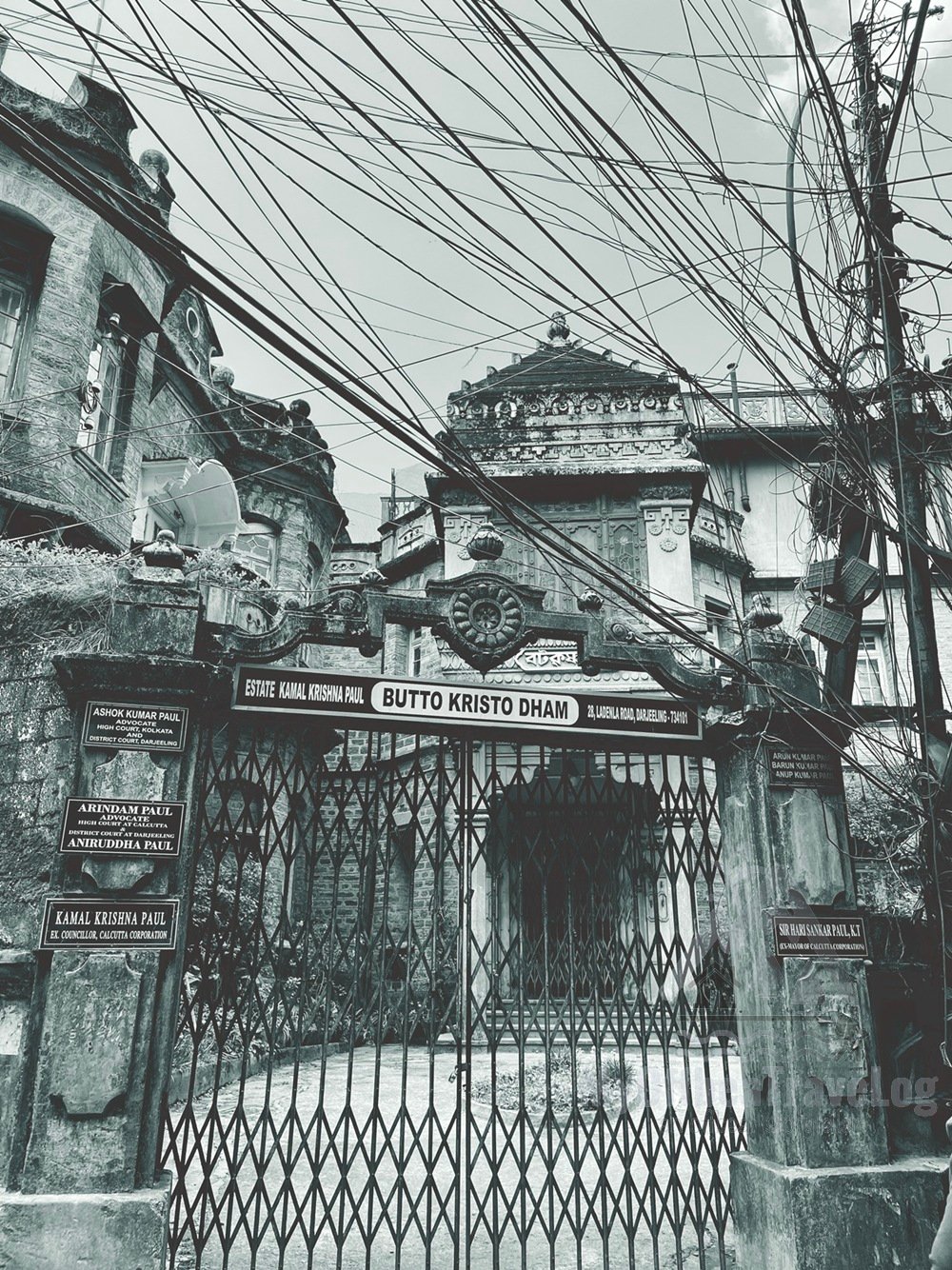
Butto Kristo Dham
Located on Laden La Road in Darjeeling’s Chowk Bazaar, is a century-old heritage mansion associated with the family of renowned Bengali pharmacist and industrialist B. K. Paul. It offers a glimpse into a lesser-known side of Darjeeling’s past—a quiet remnant of the town’s architectural and social history.
Captivated by the Monsoon Beauty of Batasia Loop
Misty hills, lush greenery, and the iconic Toy Train make Batasia Loop magical during the monsoon.
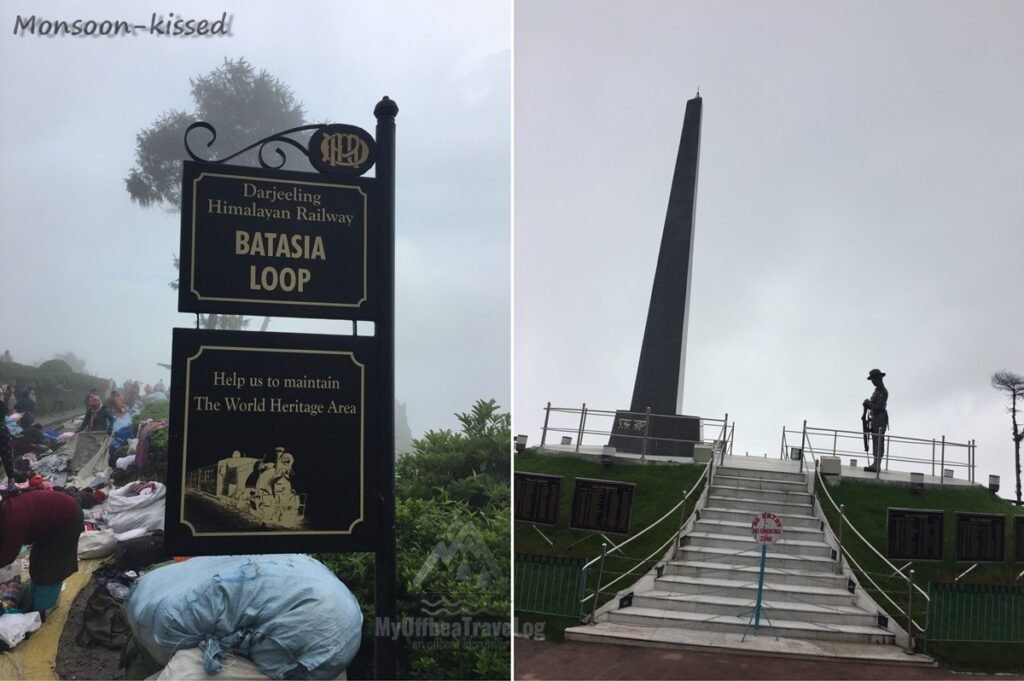
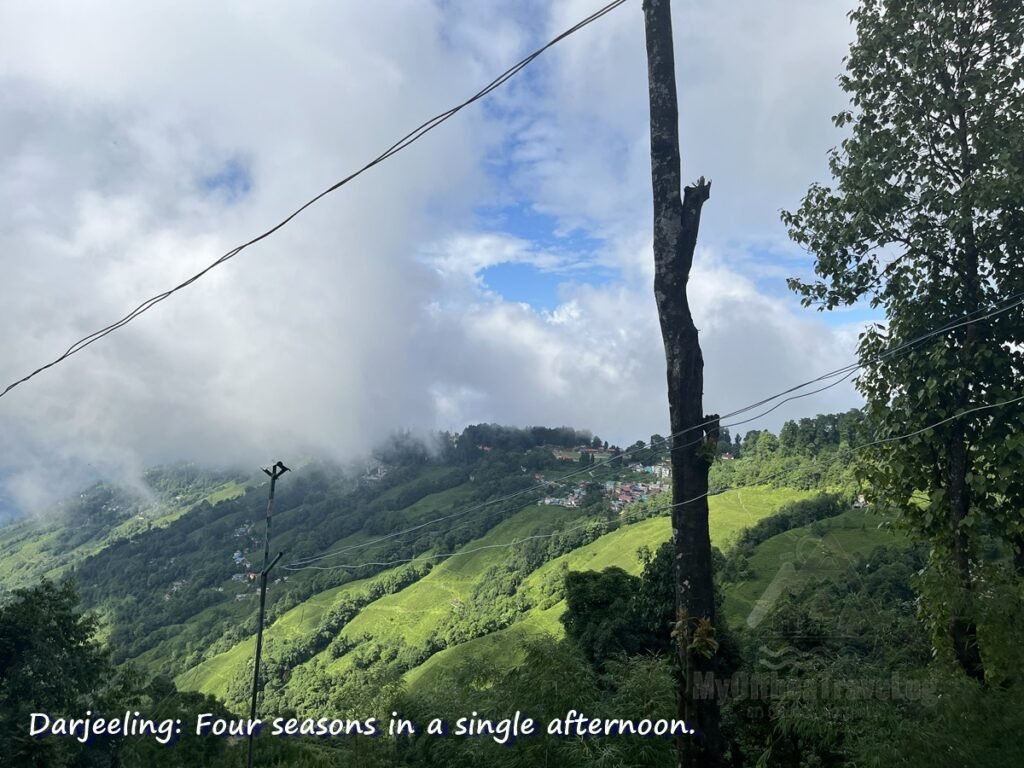
Captured the monsoon mood, one frame at a time
From Lebong (Darjeeling) — Clouds, Sunlight, and a remote OFFBEAT village.
Walking around the Darjeeling Mall and Observatory Hill areas, enjoying the surrounding scenery, and then relaxing a bit while sipping a cup of Darjeeling tea.
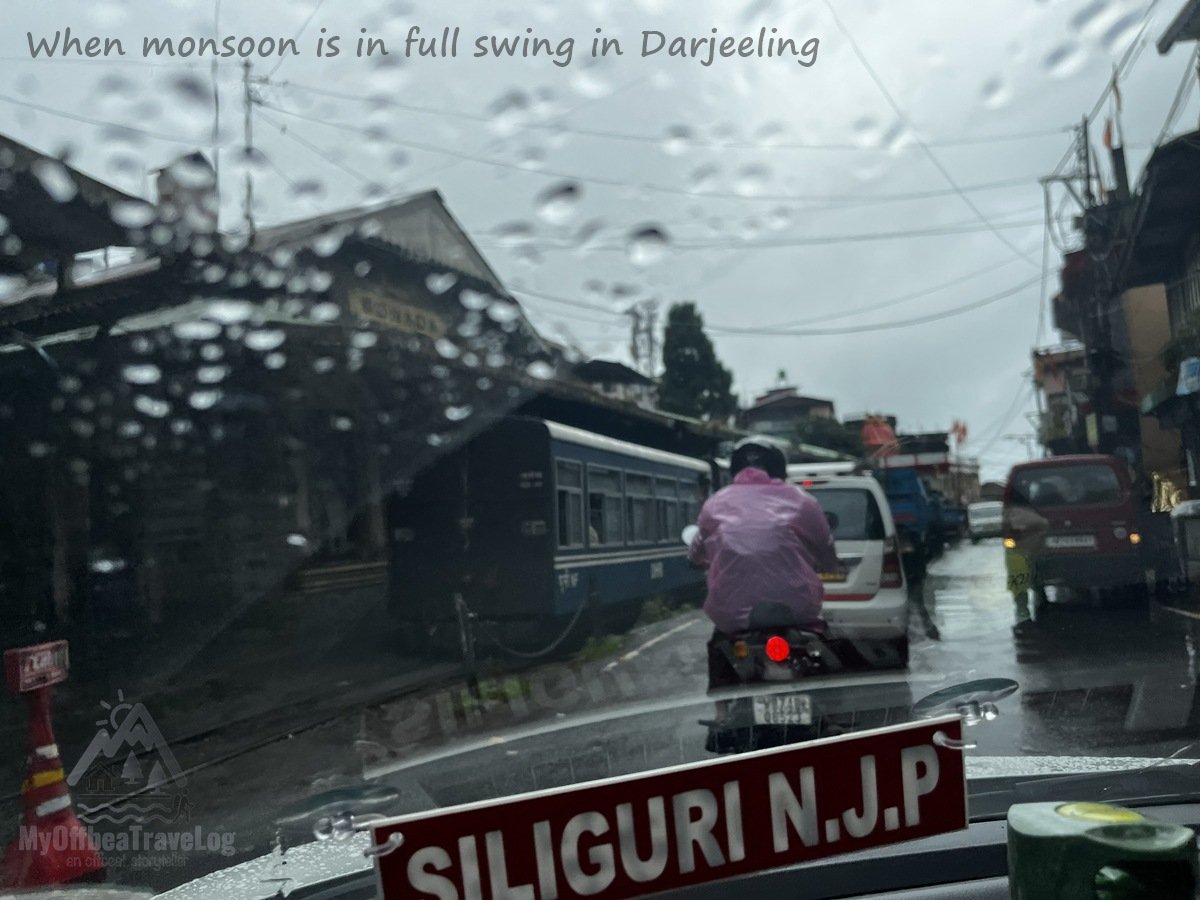
Slow steps on a rain-washed uphill road of Darjeeling.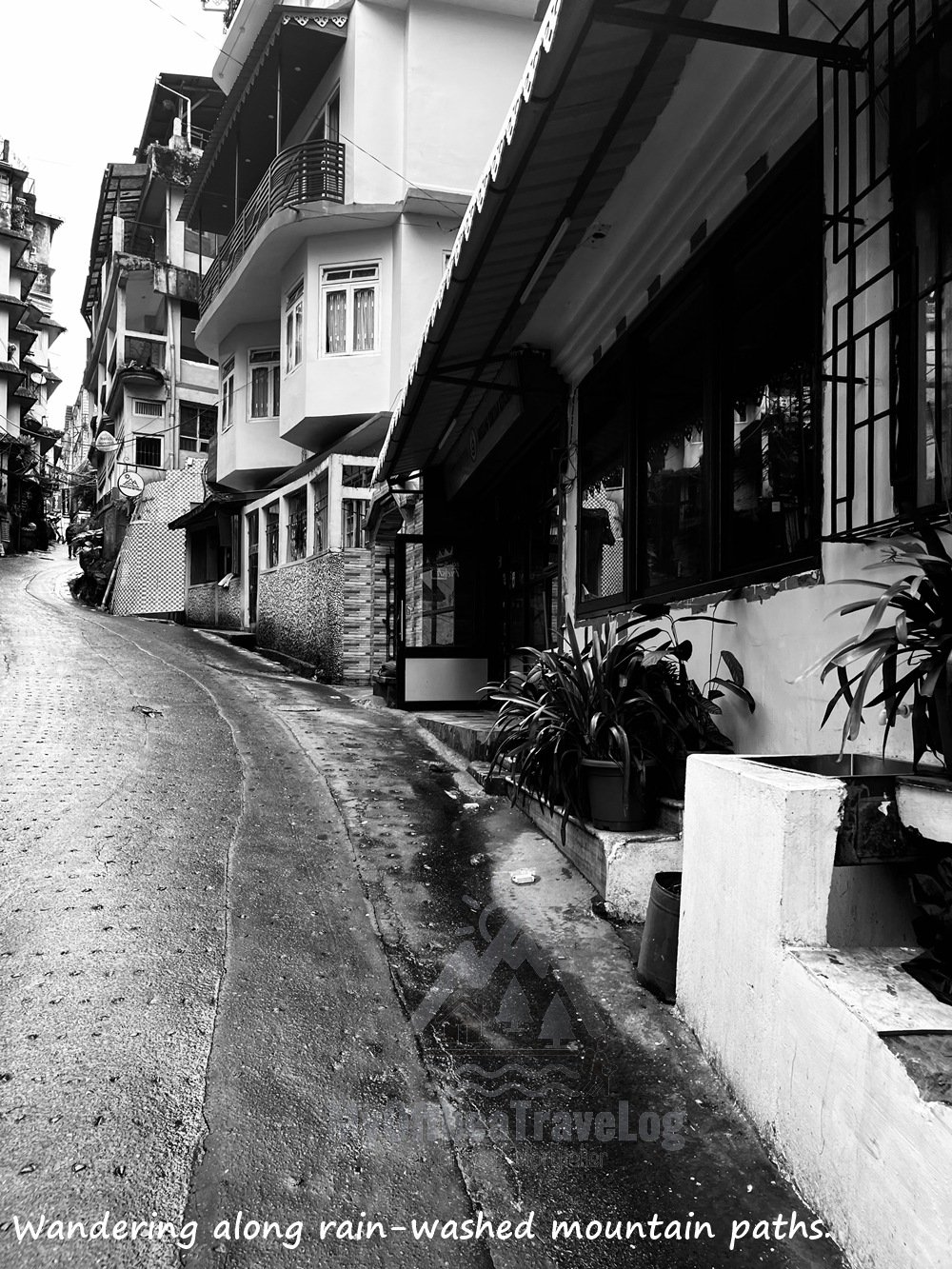
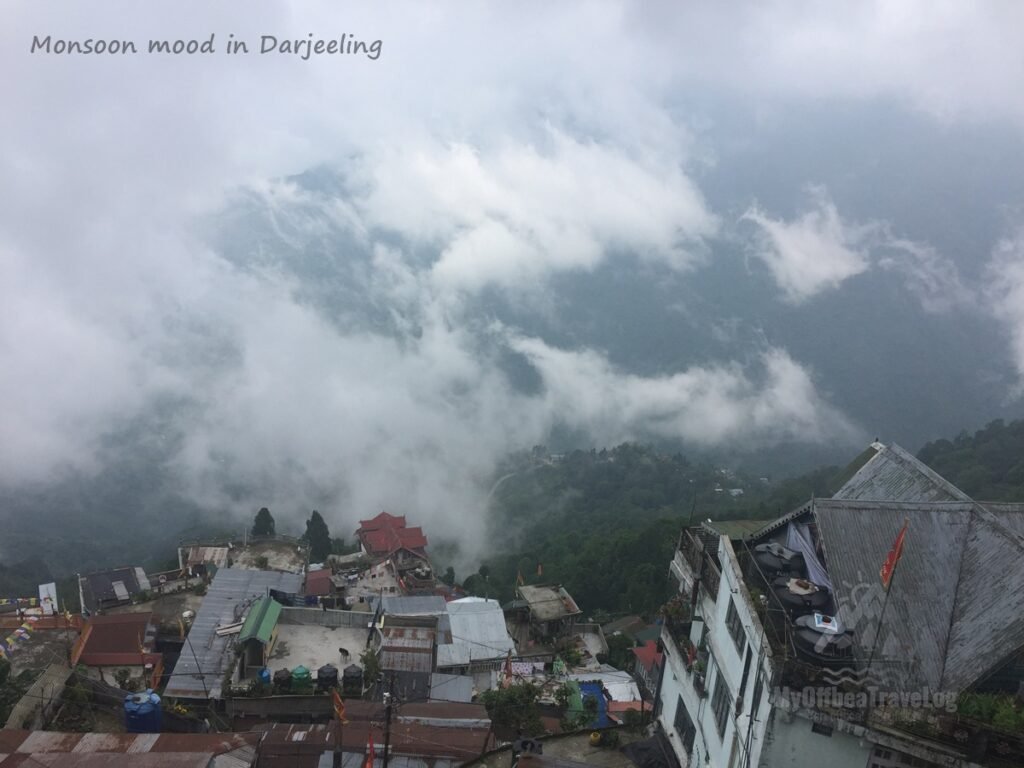
Above the clouds, where the hills unfold beneath a bird’s-eye view—just mist, winding roads, and the quiet beauty of the journey.
Taking the rainy road to a quiet offbeat village near Darjeeling, with no rush.
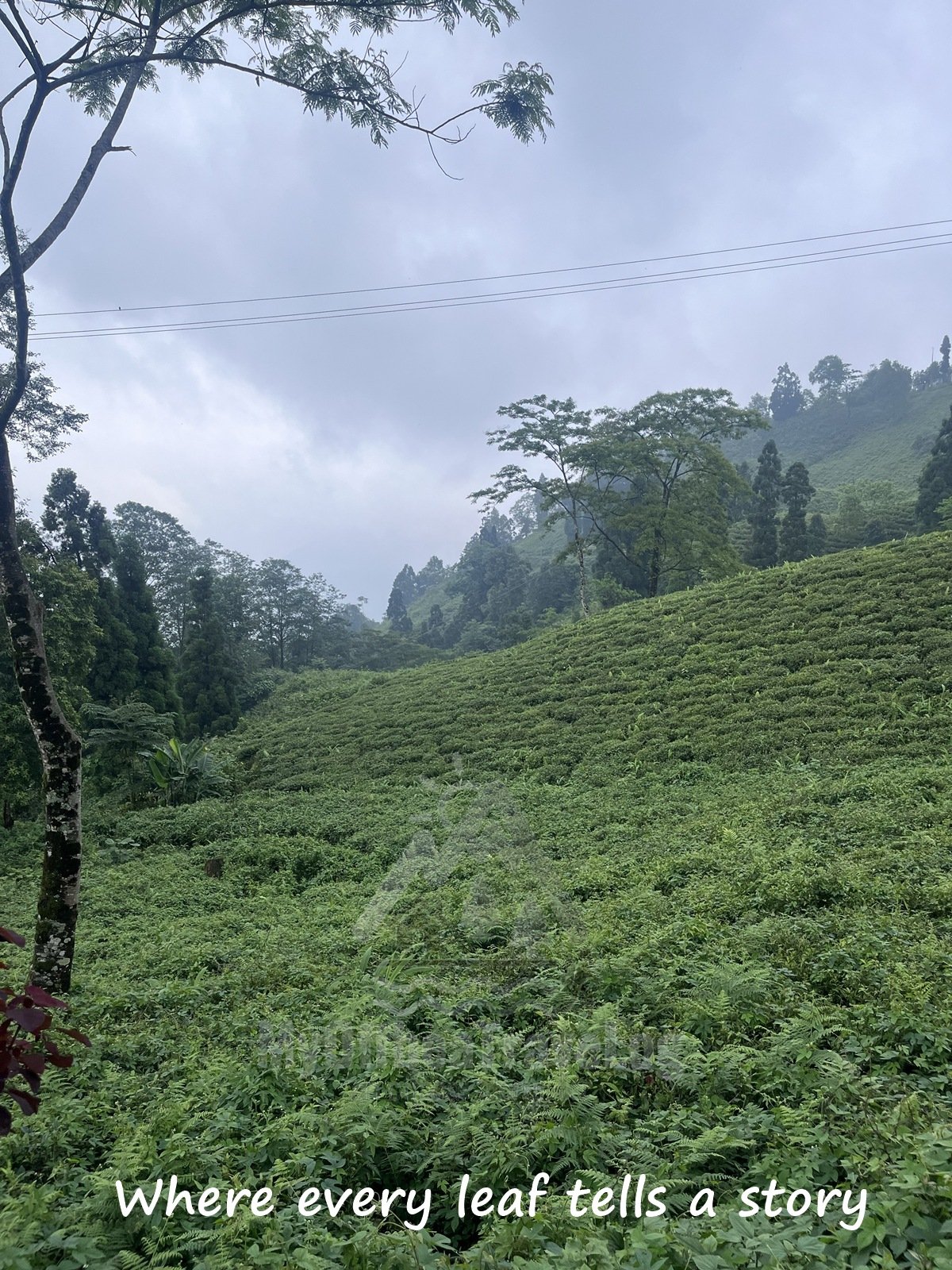
Where the hills breathe green and every sip feels like a little piece of heaven.
An old lady in her traditional attire, carrying the quiet charm of Darjeeling.
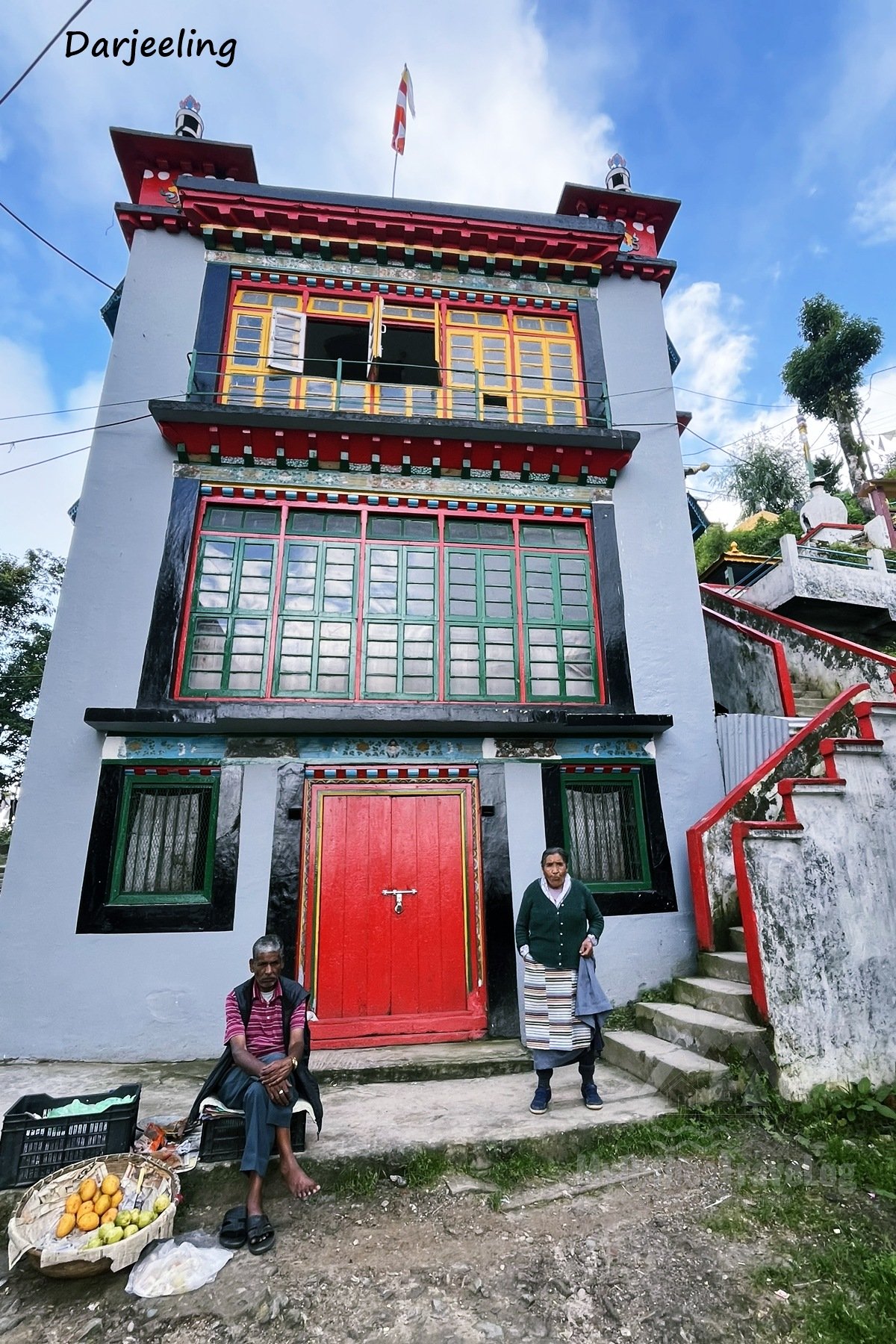
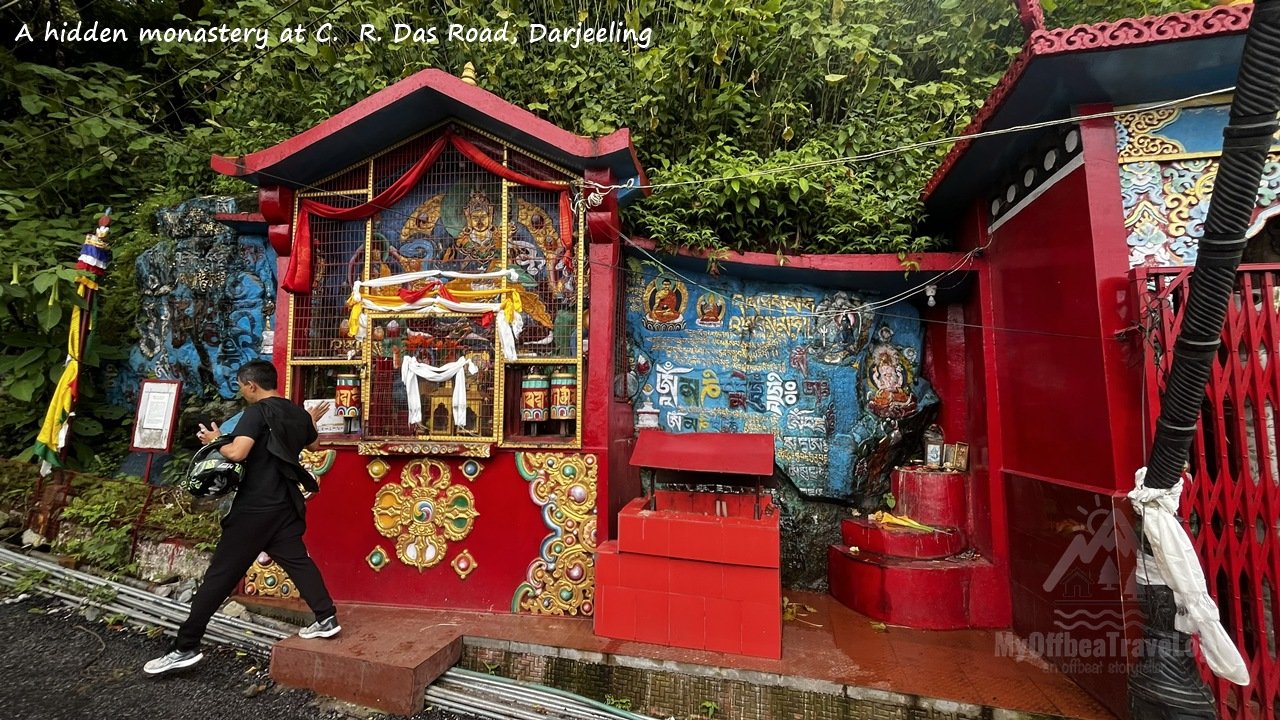
A hidden monastery by the roadside, quietly beautiful.
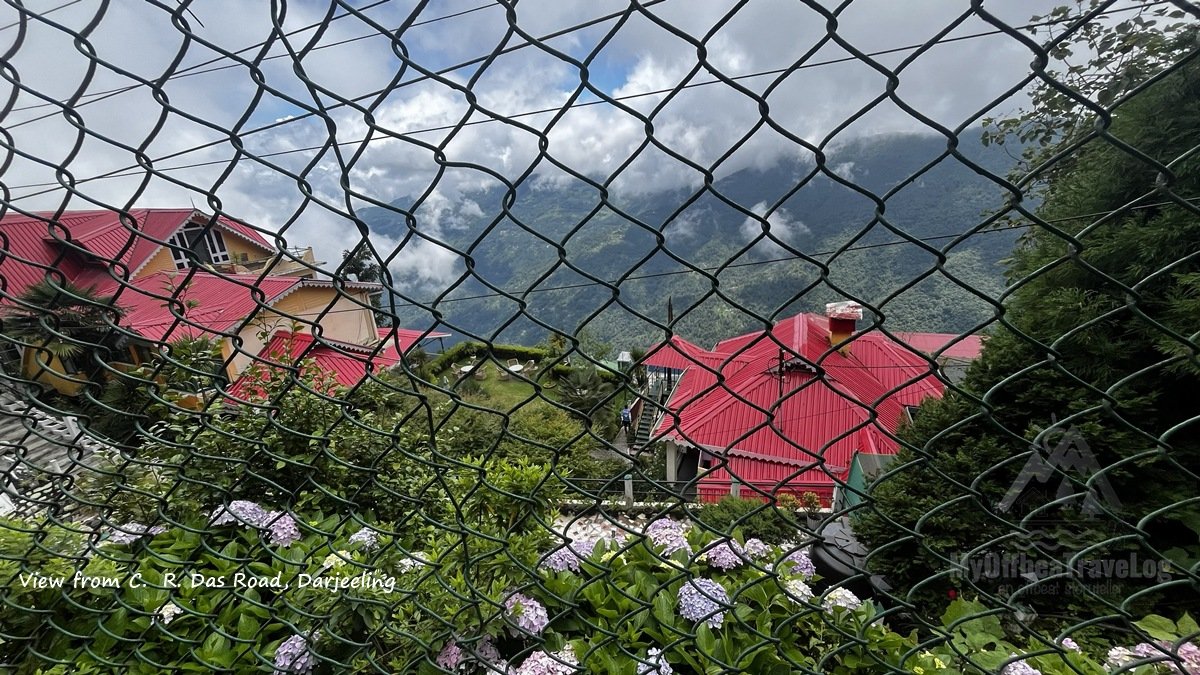
Quietly soaking in the fresh beauty of the monsoon.
What to Eat and Where in Monsoon Darjeeling?
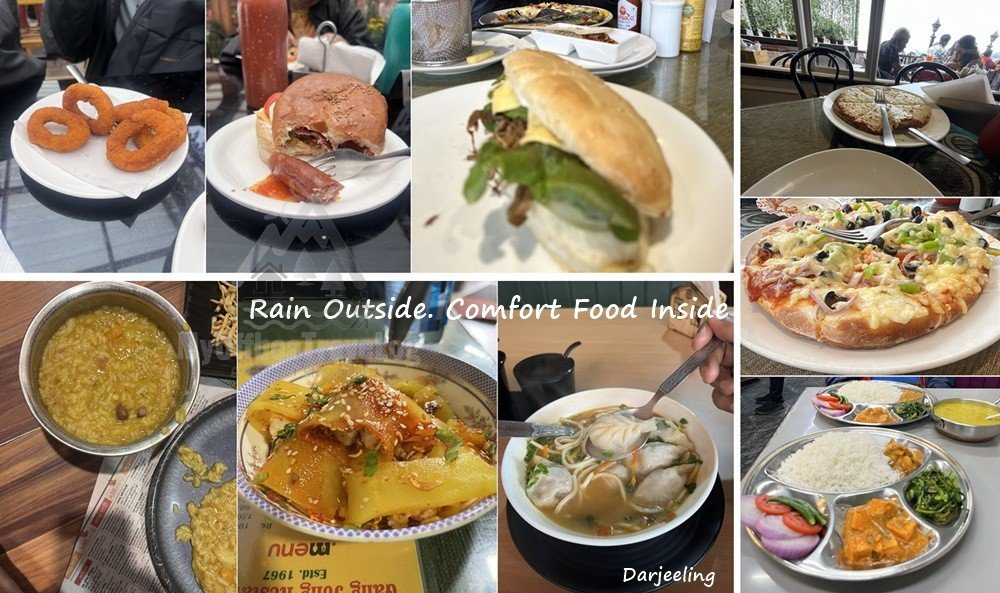
Darjeeling is a place where Himalayan traditions meet unforgettable flavors. It is not possible to capture the entire culinary journey of Darjeeling in a single blog post. I have shared a few of the places I frequently visit when I am in Darjeeling, along with some of my favorite dishes.
English-style breakfast & Bakery
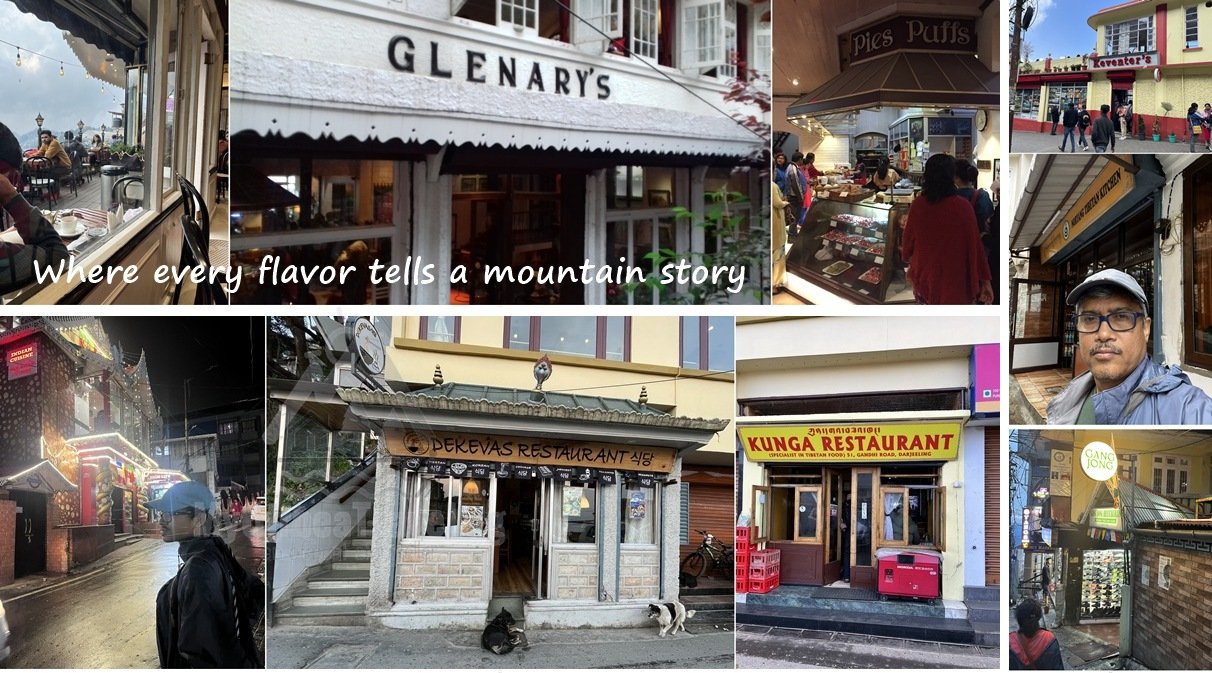
Everyone knows Glenary’s and Keventer’s —they are almost synonymous with Darjeeling’s food scene.
- Glenary’s — An iconic heritage bakery, known for its freshly baked breads, pastries, pizzas, cakes and old-world charm.
- Keventer’s — A Darjeeling breakfast classic since 1911, famous for its hearty English-style breakfast of sausages, bacon, eggs and toast.
Tibetan, Chinese & Asian Dishes
- Noryang Tibetan Kitchen — a good option if you want to explore beyond the most famous tourist restaurants.
- Gang Jong Restaurant — is a small, long-running Tibetan restaurant on N.B. Singh Road in Chowk Bazaar, Darjeeling. Their momos, thukpa and laphing are among the dishes worth trying.
- Kunga Restaurant — a classic Tibetan comfort-food giant, it is also highlighted by Incredible India as a place to experience authentic Tibetan cuisine.
- Dekevas Restaurant — is located beside Kunga Restaurant in Darjeeling and also has a branch in Siliguri.
- The Park Restaurant — located near SBI in Darjeeling, known for its Pan-Asian cuisine.
Nepali Cuisine
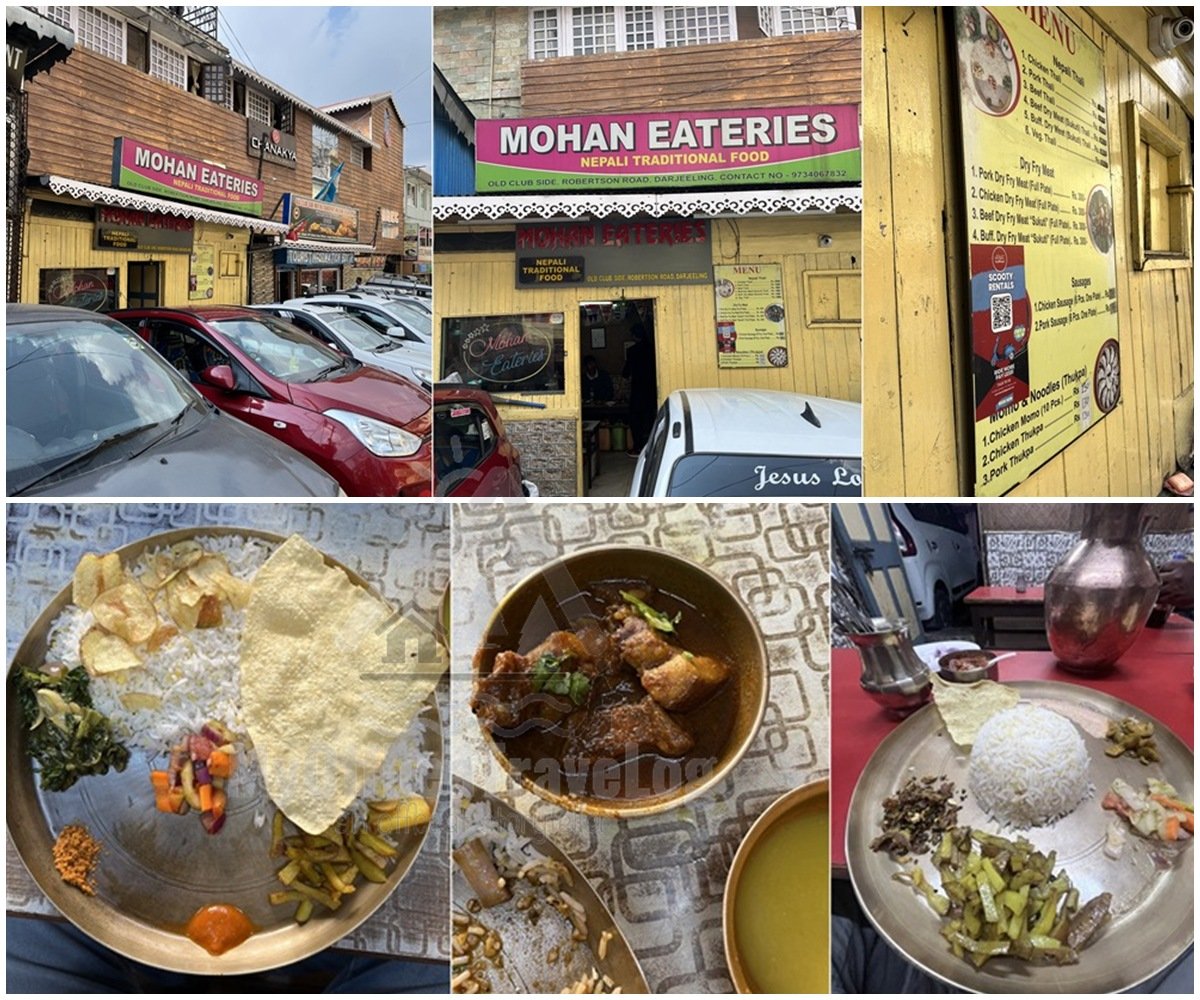
- Mohans Eateries — Located on Robertson Road, near the Old Club side of Chowk Bazaar, this old-time food paradise is one of my go-to places in Darjeeling for traditional Nepali food. It serves hearty, authentic Nepali Thali and flavorful Sukuti—dried, fried meat that is a must-try. If you’re looking for a taste of Darjeeling’s local food culture, this is one place you simply shouldn’t miss.
- Kathmandu Kitchen — is a good stop if your Darjeeling food journey is focused on Nepali cuisine. It is in the Chowk Bazaar area, near SBI, and is also known for Nepali thali-style meals.
Where to Stay
Darjeeling offers a wide range of accommodation options, from charming heritage hotels and colonial-style properties to cozy homestays, hostels, boutique hotels, and budget-friendly stays. Whether you want breathtaking views of Kanchenjunga, a peaceful mountain retreat, or a convenient location near Chowrasta and Mall Road, you’ll find options to suit every preference, budget, and travel style.
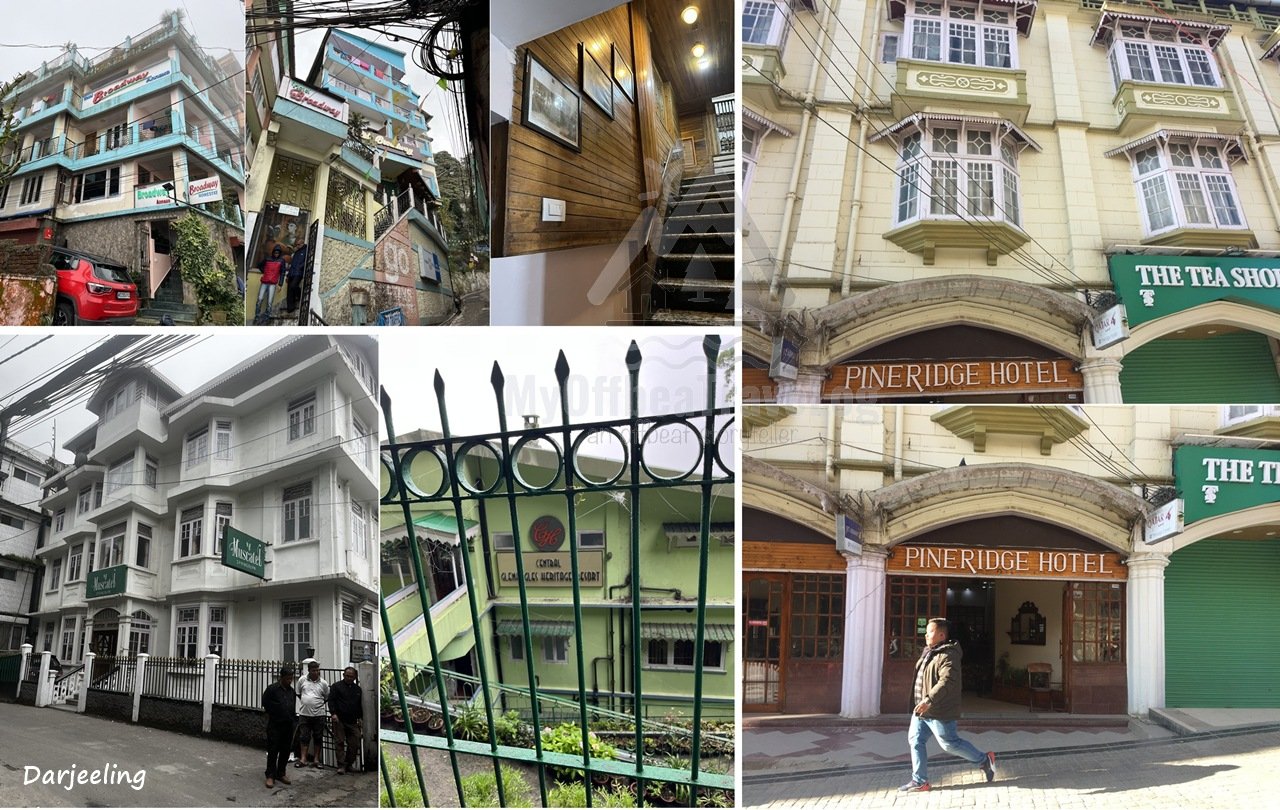 Accommodation can be booked through popular online travel platforms or directly with the property. Before finalizing your booking, it is advisable to compare factors such as location, guest reviews, room amenities, views, cancellation policies, and the total cost. For homestays, communicating directly with the host is often a good option, as it can help you clarify facilities, availability, meals, and other important details.
Darjeeling Weather During the Monsoon
 During the monsoon season (June–September), temperatures in Darjeeling generally range from 13°C to 22°C. Expect heavy rainfall, dense fog, high humidity, and reduced visibility, with humidity often exceeding 90%.
Heavy rain can lead to slippery roads, landslides, and temporary road closures, so be sure to check the latest weather and road conditions before travelling.
Don’t expect clear views of Kanchenjunga during the monsoon.
However, the monsoon is a wonderful time for those who enjoy lush green surroundings, vibrant tea gardens, misty landscapes, and gushing waterfalls and rivers. With proper planning and an adventurous spirit, Darjeeling’s monsoon can offer a uniquely refreshing experience.
Monsoon Travel Precautions for Darjeeling
WHAT TO PACK
A lightweight waterproof jacket, a lightweight hooded windcheater, Poncho, umbrella, waterproof shoes with good grip, 3–4 pairs of socks (ideally quick-dry/water-resistant), Water-resistant trousers & T-shirts, one small quick-dry microfiber towel, and warm layers (for evenings).
Put clothes, medicines, documents, and electronic gadgets inside waterproof packing bags/zip-lock bags inside your luggage.
SAFETY ADVISORY
- Avoid standing or parking vehicles on steep slopes or in areas at risk of landslides. Stay away from fast-flowing mountain rivers and waterfalls with strong or sudden water flows.
- Avoid travel at night. Use a reliable local driver/taxi rather than self-driving on unfamiliar hill roads.
- During continuous heavy rain, avoid travelling just because tickets are booked. Keep hotel bookings flexible where possible.
- Allow extra time in your itinerary, as roads may be temporarily closed due to heavy rain.
- Check weather forecasts and road conditions before travelling. If landslide or travel disruption warnings are in effect, take an alternative route.
Souvenir
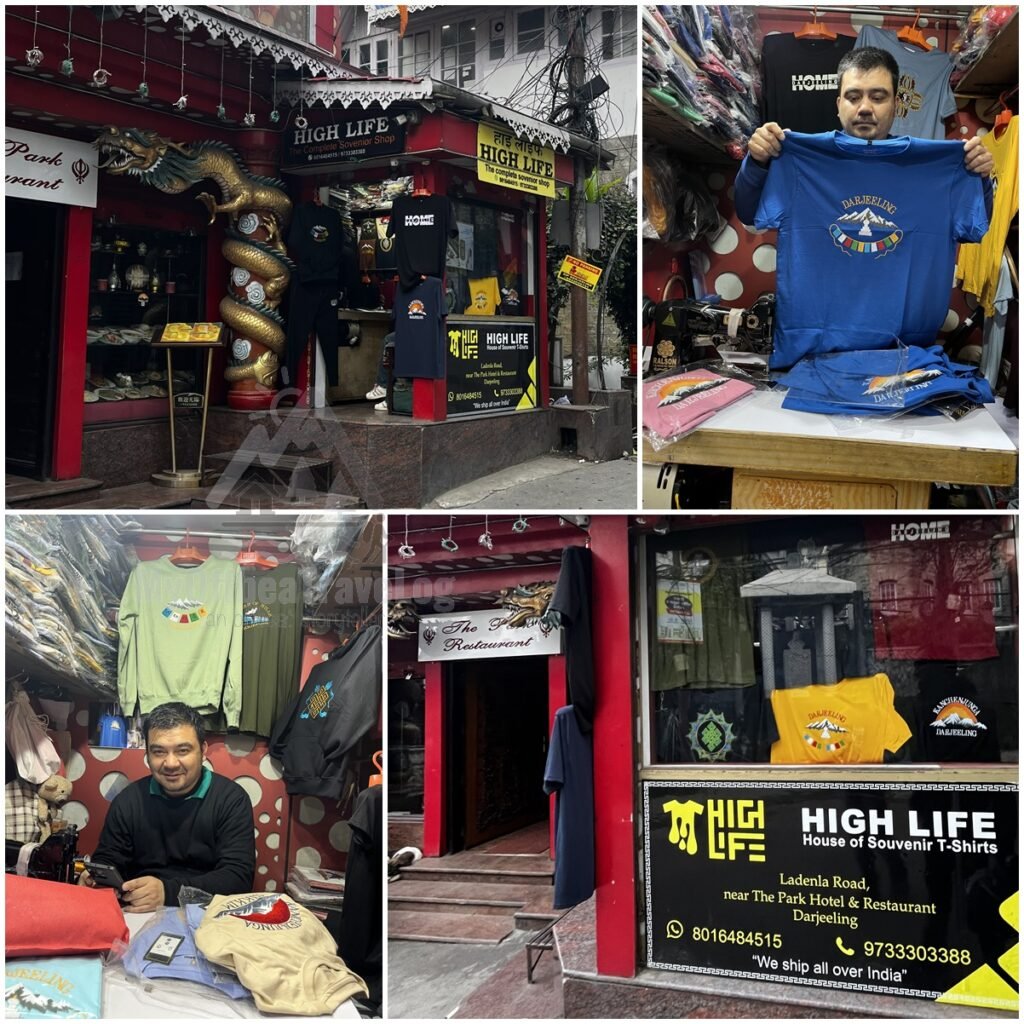
HIGH LIFE (House of Souvenir T-Shirts) is one of my favourite souvenir shops on Laden La Road, near The Park Restaurant in Darjeeling. The shop is known for its custom-embroidered T-shirts and hoodies.
It is run by a young, soft-spoken local entrepreneur whose warm and welcoming nature is sure to charm you. Whenever I visit Darjeeling, I simply cannot resist stopping by—and I always end up buying something. If you are in Darjeeling, do drop by and have a look. You may well find something special to take home.
 If you wish to make a purchase, you can contact him at the numbers listed below.
WhatsApp: +91 9733303388
Phone: +91 8016484515
*** Please note that this is not a paid promotion; it is simply my way of supporting a local entrepreneur. ***
Darjeeling souvenirs aren’t just T-shirts, Nepali dresses, handicrafts, and mementos. I bring home Dalle, Gundruk, Iskus ko Munta, Ningro, and little tastes of the hills.
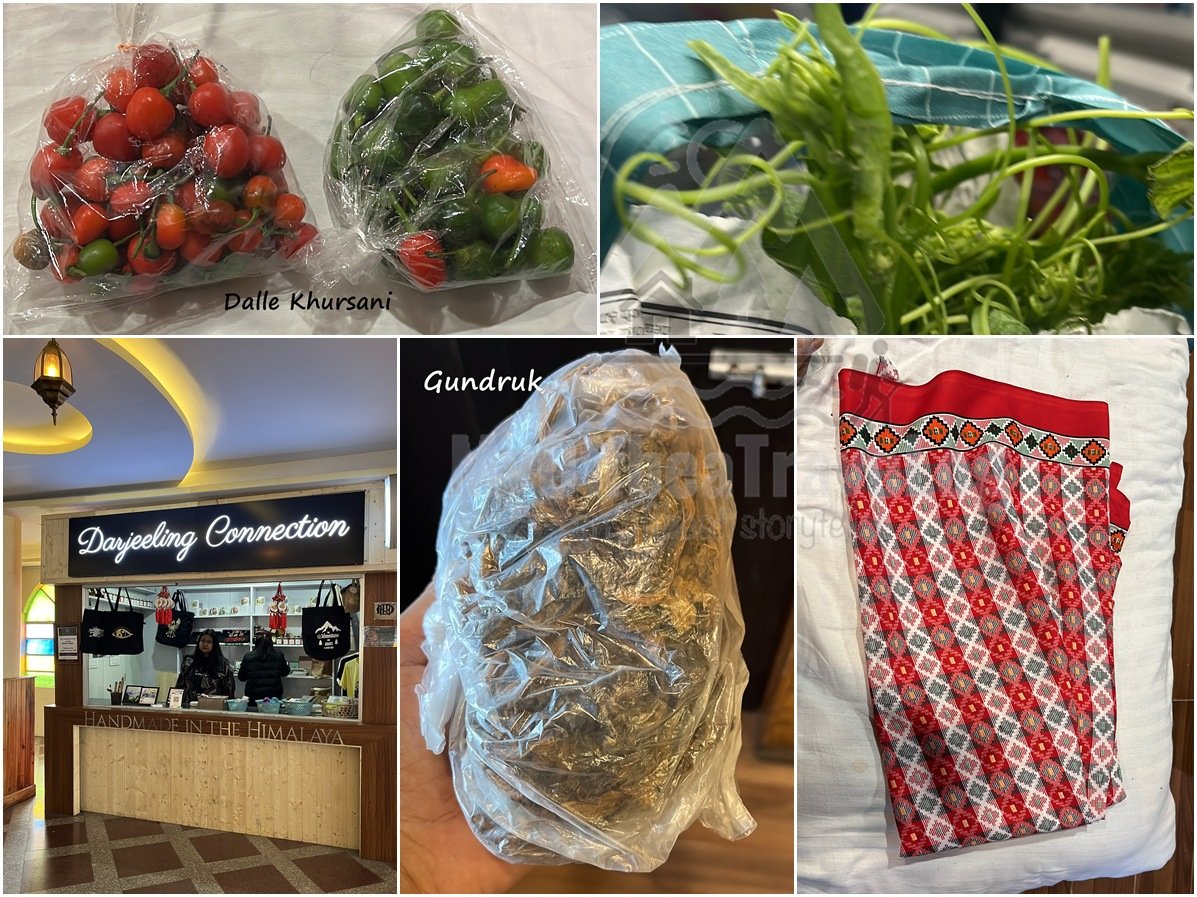 Discover more about Darjeeling Connection:
darjeelingconnection.com
And yes, Darjeeling Tea (Champagne of Teas) is a must—because without its tea, Darjeeling feels incomplete. What we bring home isn’t always a souvenir. It’s a little piece of the place we carry home. 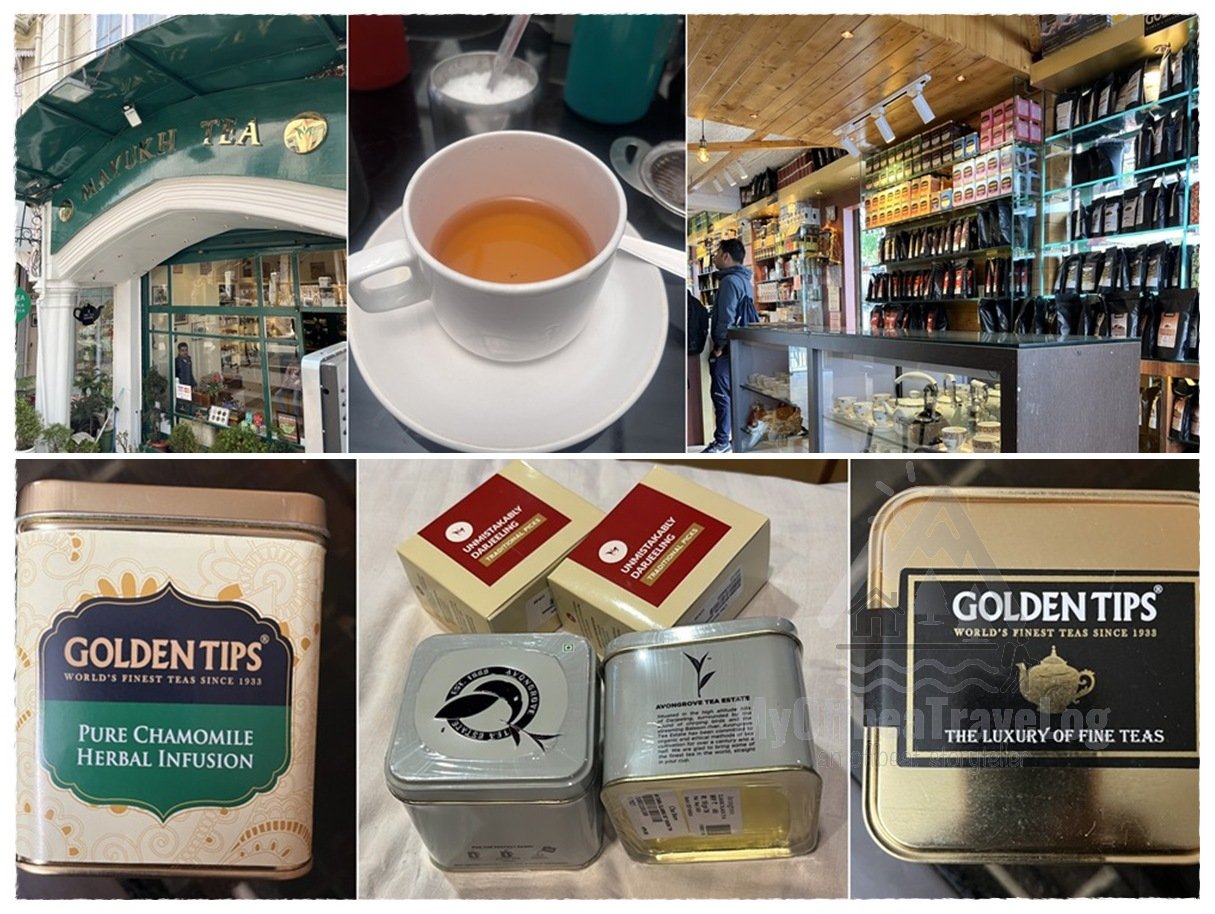
 There are many other places in Darjeeling that I’ve visited during different seasons. In a future travel post, I’ll share those experiences and showcase a completely different side of this beautiful hill town.
Please do read this blog post on Darjeeling’s monsoon tourism and share your valuable feedback in the comments section. I’d love to hear your thoughts and experiences.
Also, I’m only sharing my personal experiences with homestay or hotel owners, locals, drivers, and tour guides while traveling. Your experience may be different, and I take no responsibility for that. This is shared for information only and is not intended as promotion.
Related Blogpost (s)
- Tea Tourism – Emerging power in North Bengal & Sikkim
- Takdah: A misty offbeat amidst pine forests & tea gardens
- Rungli Rungliot Tea Garden – An offbeat for Monsoon Tourism
Comments
Leave a Reply

All your blogs are illaborated distinctly as before and came to know that "Darjiling"is a mixture of two words "Dorji"&"Ling".
Thank You very much for your inspiration.
Wow..just wow.. How much more detailed can it get. Its as if you have visited the place in person . I doubt even a local guide would know these many details.